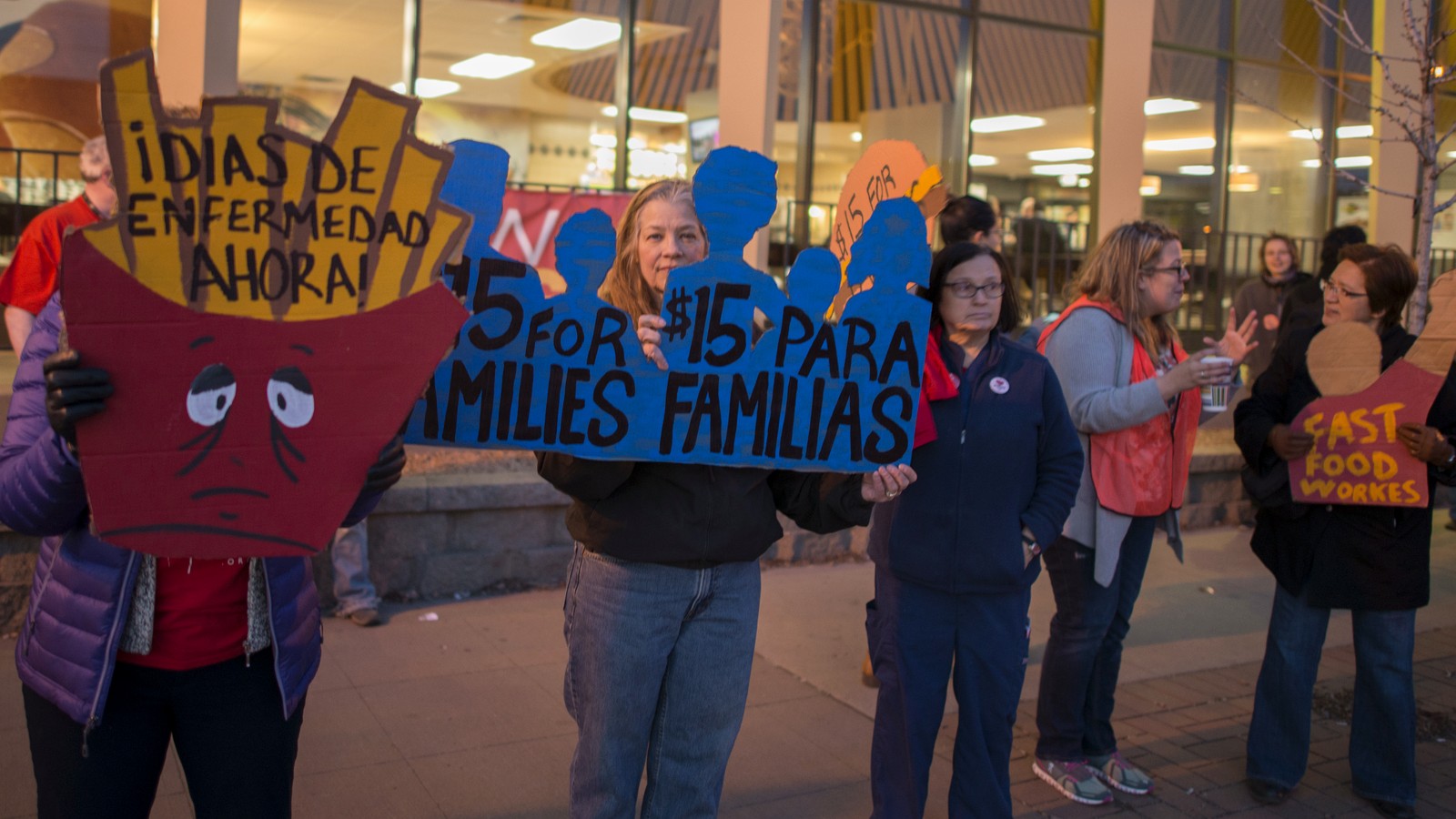
The federal floor is frozen in a different economic era
The Department of Labor still lists the federal minimum wage at $7.25 an hour, effective July 24, 2009. The national floor has stayed unchanged across multiple administrations, inflation spikes, and a radically different labor market.
The federal baseline remains the legal minimum in places that have not moved higher on their own. Higher standards elsewhere do not erase the frozen national floor.
A full-time minimum-wage year is $15,080 before taxes
Using a standard 40-hour workweek across 52 weeks, a full-time schedule at the federal minimum works out to about $15,080 a year before taxes.
The figure is the direct annualized math of the current federal floor.
The gap with typical full-time pay is now enormous
The Bureau of Labor Statistics reports median weekly earnings of $1,204 for full-time wage and salary workers in 2025, which annualizes to $62,608.
Measured against that median, a full-time minimum-wage schedule is roughly 24.1 percent of annualized full-time earnings.
That turns the federal minimum into a policy signal as much as a wage standard
A federal minimum this weak does not describe a plausible standard of economic security in much of the country. It functions more like a signal about how much labor the national baseline is willing to leave exposed.
Wage floors shape bargaining power, hiring norms, and the lower boundary of what employers think they can get away with paying.
State variation does not make the national floor irrelevant
Many states and cities have set higher minimums. The federal floor still governs workers in lower-standard states and still represents the baseline national labor value set in federal law.
After sixteen years of drift, the federal baseline still says $7.25 an hour is acceptable.
Sources & records
Reviewed by Standards Review. Updated April 13, 2026.
- Department of Labor Minimum Wage
Federal wage floor and statutory effective date.
- BLS Usual Weekly Earnings
Median earnings benchmarks for full-time workers.
- OSHA Severe Injury Reports
Public workplace injury records we can use for future labor case files.
- FTC Cases and Proceedings
Competition and merger records relevant to concentration claims.