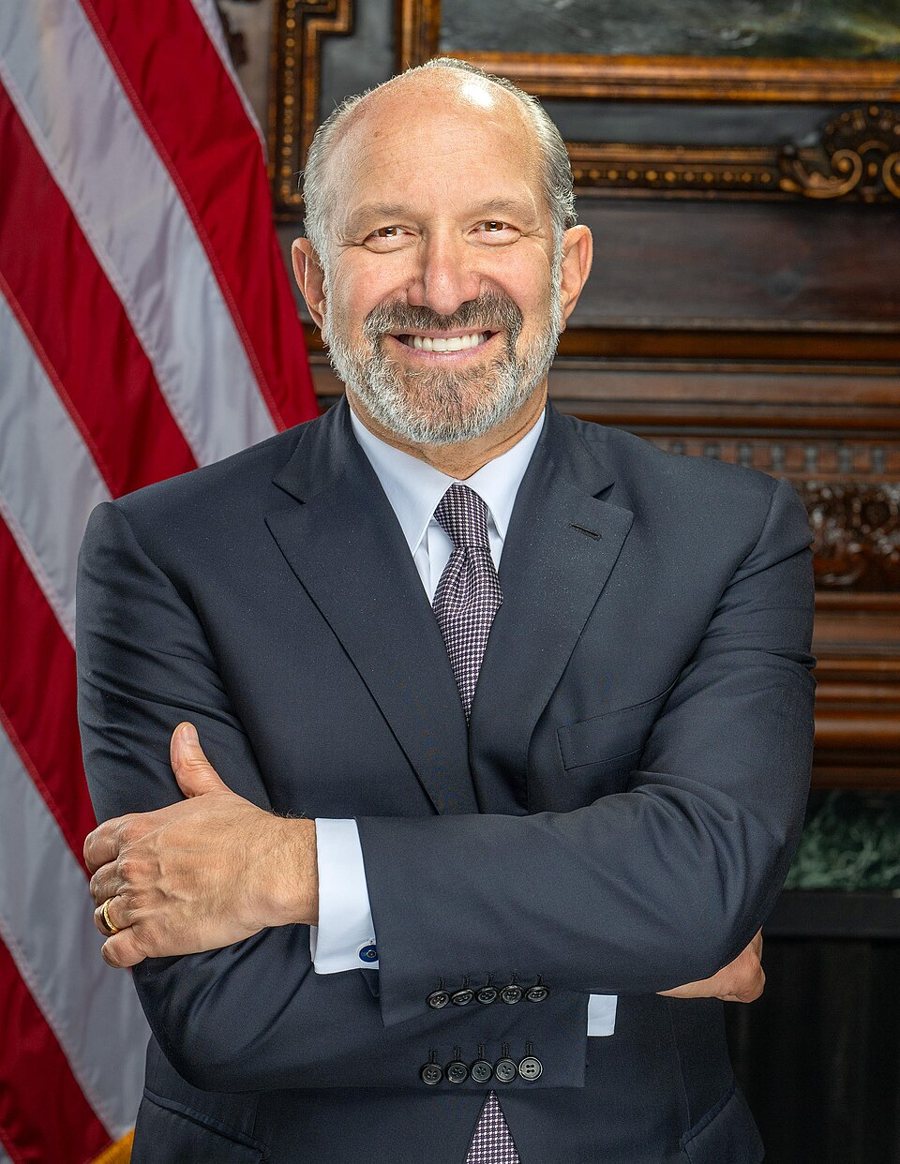
Lutnick arrived from the exact world Commerce policy can move
AP's pre-confirmation coverage anchored Lutnick as the longtime Cantor Fitzgerald chief executive, a Trump transition leader, and a figure with direct exposure to finance and crypto markets. Commerce is not a neutral perch for someone coming out of that ecosystem.
The office sits close to trade policy, industrial strategy, export controls, and market-sensitive announcements. Lutnick entered a job where public decisions could move sectors and positions linked to his prior business orbit.
The disclosure problem was massive before he even took office
AP reported that Lutnick disclosed more than 800 business positions and promised to divest within 90 days if confirmed. The filing shows how large the disentanglement task was before he could plausibly claim clean separation from his prior empire.
Conflict-of-interest stories are often clearest before the final paperwork is done. When someone has that many disclosed ties, the burden is not on the public to imagine possible overlap. The overlap is the starting condition.
Then he took office and became one of the loudest tariff enforcers
AP reported that the Senate confirmed Lutnick 51-45 in February 2025. AP later reported that he publicly defended Trump's tariffs even while acknowledging they would create distortions and raise prices for some foreign goods. Another AP report described him telling Americans the administration would not fully own the economy until later in 2025 while tariff anxiety was already building.
Tariffs do not hit as abstract philosophy. They move prices, supply chains, investor expectations, and corporate planning. A Commerce secretary with deep market history becomes especially hard to separate from the turbulence he is helping create.
Commerce moved market power into cabinet power
Lutnick moved from a world built on market sensitivity into a job capable of altering trade flows, corporate expectations, industrial subsidies, and investor assumptions in real time.
A sprawling finance resume and a market-moving policy portfolio create an obvious conflict atmosphere inside the Commerce Department.
The Intel stake story made the state-capital crossover even clearer
AP reported in July 2025 that Lutnick confirmed the government was pursuing a 10% stake in Intel by converting federal support, and AP later reported in August that the deal closed. Commerce was reaching directly into the cap table of one of America's most important chip companies.
Lutnick was a top official helping oversee a government willing to behave like an investor while he himself was still navigating the afterimage of enormous private holdings.
Sources & records
Reviewed by Standards Review. Updated April 13, 2026.
- White House Cabinet Page
Official White House cabinet page used to anchor Lutnick's role as commerce secretary.
- AP What To Know About Howard Lutnick
Used for Lutnick's background as Cantor Fitzgerald chief, crypto enthusiast, and Trump transition co-chair before taking office.
- AP On Lutnick's Confirmation
Used for Lutnick's 51-45 confirmation and the centrality of tariffs to his Commerce role.
- AP On Lutnick's 90-Day Divestment Pledge
Used for Lutnick's promise to sell all of his business interests and for AP's account of his more than 800 disclosed positions.
- AP On Tariff Blowback And Lutnick's Defense
Used for Lutnick's public defense of Trump's tariffs, including his acknowledgment of distortions and higher prices for some foreign goods.
- AP On Tariff Anxiety And Lutnick's Timeline
Used for AP's reporting that Lutnick said the administration would not be fully responsible for the economy until late 2025 while tariffs rattled public confidence.
- AP On Intel Stake Negotiations
Used for Lutnick's confirmation that the government was pursuing a 10% stake in Intel through converted federal support.
- AP On The Intel Stake Closing
Used for the final August 2025 deal that made the U.S. Government a major Intel shareholder under Lutnick's Commerce Department.