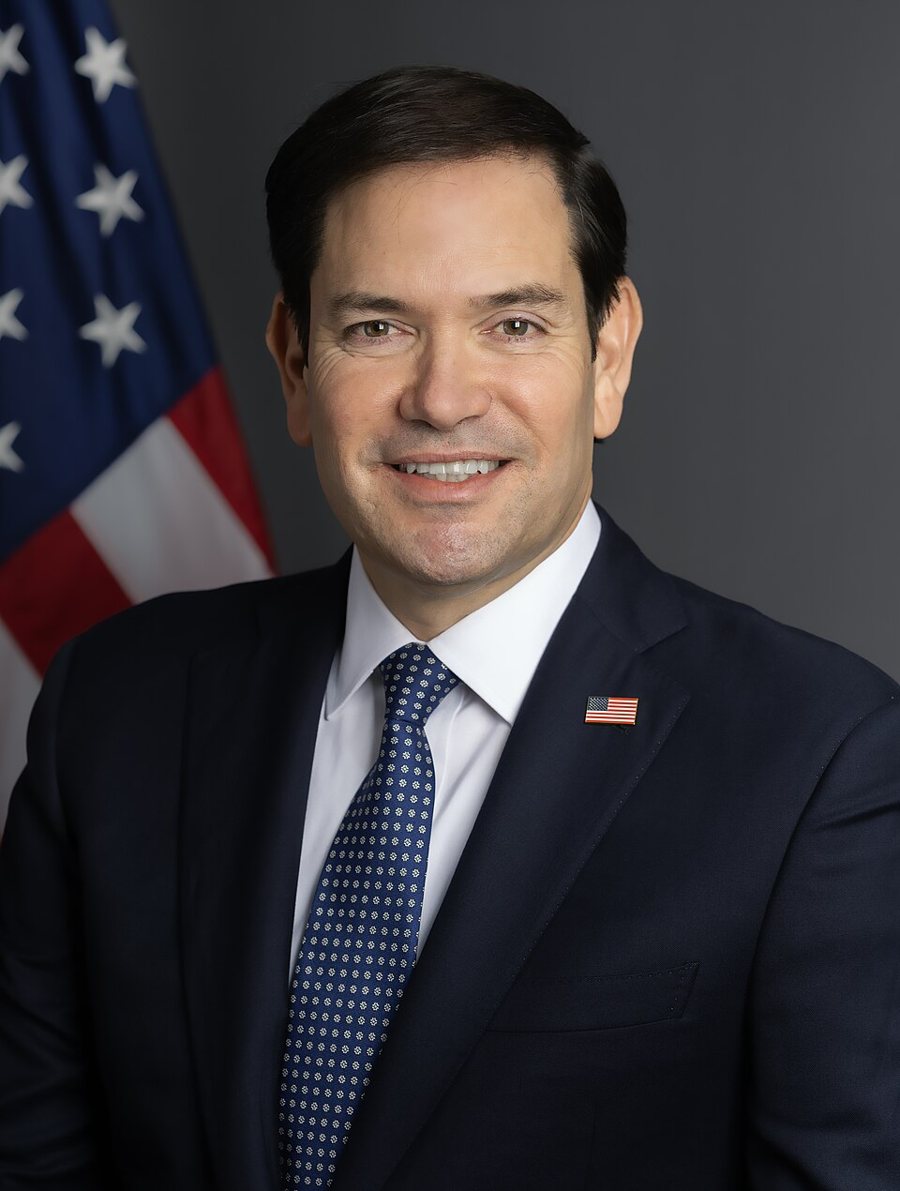
Rubio took over State with near-total Senate comfort
AP reported that the Senate confirmed Rubio as secretary of state by a unanimous 99-0 vote on January 20, 2025. It gave him unusual bipartisan legitimacy at the front end of Trump's second term.
The unanimous confirmation gave Rubio unusual institutional backing before the later concentration of authority around him.
Then USAID was folded into his orbit
AP reported in March 2025 that Rubio said the administration had eliminated about 5,200 of USAID's 6,200 programs and would move the rest under the State Department. That was not a minor management tweak. It was a massive narrowing of a semi-distinct aid architecture into a department already run by one of Trump's most politically useful cabinet figures.
The move narrowed a semi-distinct aid architecture into a department already under Rubio's control.
The State Department gave Rubio several power lanes at once
The State Department touches diplomacy, sanctions, visas, foreign aid, and high-level national-security coordination.
The USAID shift and the dual-hat national-security period both concentrated more of those lanes around Rubio.
For a stretch he held two of the top national-security jobs at once
AP reported in May 2025 that Rubio became only the second person ever to simultaneously hold the roles of secretary of state and national security adviser, even if the White House treated the NSA side as temporary. AP later reported that he also inherited Mike Waltz's duties in the interim reshuffle.
The temporary dual role placed State Department authority and White House national-security coordination under the same official.
His State Department also became a blunt instrument in the visa crackdown
AP reported in May 2025 that Rubio announced visa revocations for some Chinese students and researchers, and that more than 270,000 Chinese students were then studying in the United States. AP also reported days later that the State Department froze new student-visa interviews while it prepared expanded social-media vetting.
The visa actions put border screening, education access, and diplomatic power inside the same State Department enforcement lane.
Sources & records
Reviewed by Standards Review. Updated April 13, 2026.
- White House Cabinet Page
Official White House cabinet page used for Rubio's role as secretary of state in Trump's second administration.
- State Department History Office Biography
Official State Department history page used to anchor Rubio's tenure as the 72nd secretary of state.
- AP On Rubio's 99-0 Confirmation
Used for Rubio's unanimous Senate confirmation and the fact that he became Trump's first confirmed Cabinet official on Inauguration Day.
- AP On Rubio's USAID Purge
Used for Rubio's statement that 83% of USAID programs were eliminated and the remainder moved under the State Department.
- AP On Rubio Taking Waltz's Duties
Used for the May 1, 2025 reshuffle that made Rubio interim national security adviser while he remained secretary of state.
- AP On Rubio Holding Two Security Jobs
Used for the broader analysis of Rubio simultaneously holding two top national-security roles as Trump remade U.S. Foreign policy.
- AP On Chinese Student Visa Revocations
Used for Rubio's announcement that the State Department would begin revoking visas for some Chinese students in critical fields and with alleged CCP ties.
- AP On Student Visa Interview Freeze
Used for the cable signed by Rubio halting new student and exchange visa interview scheduling while social-media vetting expanded.