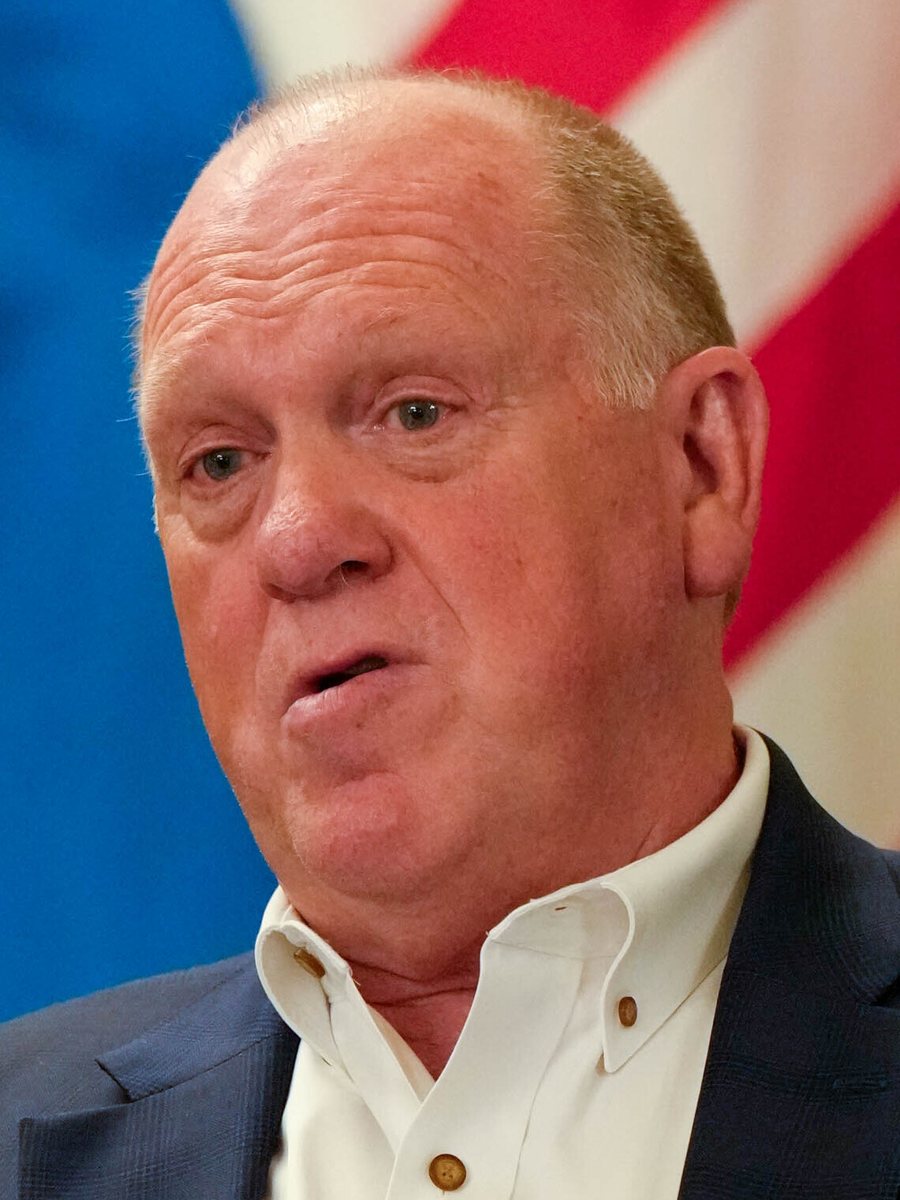
Homan came back to government with money, power, and no Senate confirmation fight
Homan's ethics filing says he was appointed border czar on January 20, 2025. The same public record shows he came in after collecting $360,000 in salary from his consulting company, plus speaking fees and honoraria tied to his profile as a hardline immigration figure.
Homan did not reappear as a forgotten retired official dragged back for technical expertise. He returned as a branded political enforcer whose value to the administration was precisely his willingness to say and do what more conventional officials might avoid.
The first-term family-separation record never stopped defining him
AP reported in December 2025 that Trump's zero-tolerance policy split more than 5,000 children from their families at the border in the first term. Homan's name stays tied to that era because he reentered power without any meaningful break from the same enforcement worldview.
That is the backdrop for everything that followed. The country was not being asked to guess what kind of immigration politics Homan represented. It had already seen the human cost once.
His second-term answer to family separation was not restraint
When asked whether deportations could be carried out without separating families, AP reported that Homan said, 'Families can be deported together.' The quote turns a moral crisis into an administrative shrug.
AP's reporting around Homan's Minneapolis appearance also described ICE detaining people with legal immigration status, no criminal records, children, and U.S. Citizens. His posture became a broader domestic enforcement model with a very high tolerance for collateral damage.
The enforcement model reached far beyond the narrow talking points
AP reported legal-status residents, people without criminal records, children, and U.S. Citizens being swept into enforcement operations, contradicting narrow public targeting claims.
AP's reporting shows the operational footprint expanded beyond the categories repeatedly used in official messaging.
The detention machine kept getting bigger
AP reported in March 2026 that immigration detention had climbed to about 70,000 people by February 2026. That is the scale context for Homan's return to power.
Homan was a central salesman and public face for an apparatus expanding fast enough to hit record or near-record detention levels while families, legal-status residents, and protected people were still being swept into the system.
Then came the bribery probe, and the system protected him
AP reported in January 2026 that Homan had accepted $50,000 from undercover agents posing as businesspeople in an FBI operation and that the episode triggered a bribery investigation. AP also reported that Trump's Justice Department ultimately shut that investigation down and that the White House stood behind him.
Federal agents developed a bribery probe after an undercover cash encounter, and the Trump Justice Department later closed it while the White House stood behind Homan.
Sources & records
Reviewed by Standards Review. Updated April 13, 2026.
- OGE New Entrant Disclosure For Thomas Homan
Official ethics filing used for Homan's January 20, 2025 appointment as border czar and for the consulting income he reported before entering the administration.
- AP What To Know About Tom Homan
Used for Homan's 'Families can be deported together' line, AP's examples of detentions reaching people with legal status and U.S. Citizens, and the account of the bribery investigation that the Trump Justice Department shut down.
- AP On Family Separation And Record Detention
Used for the first-term separation count of more than 5,000 children and for the record detention levels reached in the second term.
- AP On Judge Ordering Families Returned
Used for the February 2026 ruling that recent removals of protected families relied on lies, deception, and coercion.
- AP On 2026 Immigration Enforcement Expansion
Used for the March 2026 detention total near 70,000 and the broader expansion of the second-term deportation apparatus.