The number is 13,000 gallons
King County Wastewater Treatment Division estimated about 13,000 gallons of untreated wastewater were accidentally released into Puget Sound near West Seattle, according to KIRO 7. The release happened on June 17, 2026, during work near the 63rd Avenue Pump Station.
The county's explanation was mechanical and specific: crews were replacing a flow-control gate when another gate, used to isolate upstream flow, was found leaking. Wastewater then reached Puget Sound through the pump station's offshore emergency outfall.
Ninety minutes was enough
The reported window was roughly 90 minutes. Crews discovered the leak around 10 a.m. And stopped it by 11:30 a.m., according to the county account reported by KIRO 7.
That is the uncomfortable lesson. A failure does not need to last all day to reach the water. Sewer systems move fast, tides move fast, and public-health agencies have to respond before residents, swimmers, paddlers, dog owners, and beach walkers treat the shoreline as normal.
The warning reached the beach
Public Health - Seattle & King County warned people and pets to stay out of the water at Cormorant Cove until 11:30 a.m. On June 24, KIRO 7 reported. Advisories for Constellation Park and Charles Richey Sr. Viewpoint were lifted earlier after water-quality sampling.
That sequence is important. The spill itself may be over before many people hear about it. The public-health consequence lasts until sampling and agency review say the water can be treated as safe again.
Untreated sewage is not just dirty water
Untreated wastewater can carry bacteria, viruses, and other contaminants that belong in a treatment system, not in a public beach zone. Health agencies move quickly to post warnings so people, pets, and shellfish harvesters stay away from affected water.
The danger is easy to understate because the water often looks like ordinary gray Puget Sound water after the event. The public cannot see every pathogen from the sidewalk. Trusting the shoreline requires trusting the infrastructure and the agencies responsible for telling the truth when that infrastructure slips.
The emergency outfall did its ugly job
Emergency outfalls exist because wastewater systems are designed around failure scenarios. They keep backed-up sewage from causing one kind of emergency by routing it somewhere else during another kind of emergency.
That is not a comfort. It is a reminder that every pump station sits inside a risk tradeoff. If the system cannot move wastewater where it belongs, the backup path can put public water at risk. The ocean does not make that accountability disappear.
King County was already upgrading reliability
King County's Alki standby generator project covers the Alki Wet Weather Treatment Station and 63rd Ave Pump Station. The county says the project is intended to provide reliable power and prevent wastewater overflows into Puget Sound and nearby waters.
That project context makes the June release sharper. Public works crews can be trying to improve a system while the same system exposes a weak point. Maintenance, replacement, temporary isolation, backup power, and emergency procedures are all part of the same accountability chain.
Hidden infrastructure becomes public very quickly
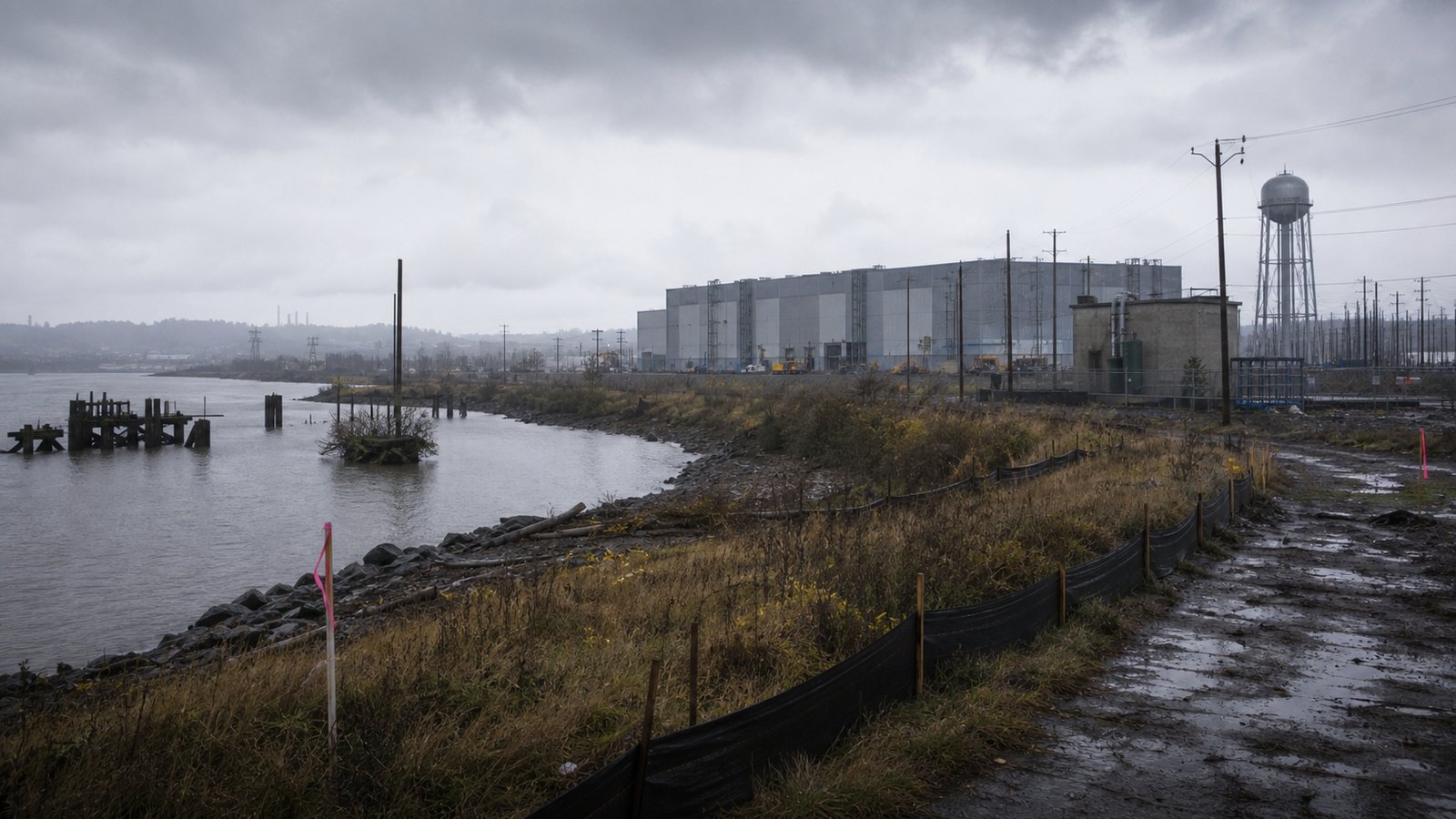
Most people do not think about a pump station unless it smells, fails, gets rebuilt, or appears on a rate notice. That invisibility is part of the bargain: residents pay for systems that make waste disappear safely.
The bargain breaks when untreated wastewater reaches the Sound. Suddenly valves, gates, outfalls, wet wells, generators, sampling protocols, agency alerts, and beach signage become a neighborhood story. The hidden system becomes visible at the worst possible moment.
The first question is timing
The public deserves a precise timeline. When did crews first suspect the isolation gate was leaking? When was the offshore outfall active? When were health officials notified? When were signs posted? When did sampling begin? When did the county determine the leak was stopped?
Those questions are not nitpicking. A 90-minute event is short enough that minutes matter. Public-health warnings are useful only if they move faster than public exposure.
The second question is volume
The 13,000-gallon figure should be explained in plain language. Was it estimated from flow rates, pump records, field observation, duration, pipe capacity, or another method? What uncertainty range belongs around that estimate?
A spill volume is not a public-relations number. It guides sampling, environmental review, public communication, and future engineering decisions. If the estimate is firm, the county should show why. If it is rough, the county should say that too.
The third question is prevention
The public should know whether the leaking gate was inspected before work began, whether the failure was foreseeable, whether redundant isolation was available, and whether future gate replacements will use different procedures.
A repair that triggers a spill needs a post-incident review. The goal is not to dunk on field crews doing difficult work in old systems. The goal is to prevent the next leak from being explained with the same sentence structure.
The fourth question is notification
Beach advisories work when the public has a real chance to see them. A person walking a dog, launching a paddleboard, or letting kids near the water should not need to follow three agency feeds and local news to know a beach is under warning.
King County and Seattle-area health officials should treat notification as infrastructure too. Signs, web alerts, map layers, text systems, marina notices, and social media posts all become part of the public-health system after a sewage release.
The fifth question is money
Sewer infrastructure is expensive, but the alternative is fake savings. Delayed maintenance, old gates, insufficient backup power, thin staffing, and rushed capital work all carry costs. Sometimes those costs appear as rate hikes. Sometimes they appear as beach closures.
Residents should not have to choose between affordable utility bills and clean water. The honest path is transparent capital planning: which assets are aging, which projects are urgent, which risks remain, and how public money is being used to reduce those risks instead of merely reacting after the warning tape goes up.
Climate pressure raises the stakes
Puget Sound wastewater systems already face heavy rain, wet-weather flows, power risk, shoreline constraints, and aging infrastructure. Climate volatility makes those pressures less forgiving.
A gate leak during planned work is not the same as a storm overflow, but both belong to the same preparedness conversation. The region needs systems that can handle maintenance, outages, storms, equipment failure, and human error without treating public water as the backup container.
Our take: small spills deserve serious reporting
A 13,000-gallon release is easy for officials to frame as contained, temporary, and resolved. It may be all three. It still deserves scrutiny.
Small failures are often the public's best warning before larger ones. They expose weak procedures, old equipment, notification gaps, and the temptation to make sewer infrastructure boring again as soon as the signs come down.
Our take: the Sound is not a pressure valve
Puget Sound cannot be treated as the place where system failure gets diluted into forgetfulness. A public water body is not an accounting category, and a beach advisory is not a substitute for prevention.
If emergency outfalls are part of the system, then every agency responsible for that system should be able to explain how often they are used, under what conditions, how incidents are reported, and how infrastructure plans reduce the chance of future releases.
Our take: publish the after-action review
King County should publish a plain-language after-action review for the June 17 release. The review should include the work plan, failure sequence, estimated volume method, notification timeline, sampling results, repair details, and any changes to future gate-replacement procedures.
Residents should not have to file records requests to learn how untreated wastewater reached their shoreline. If the county wants public trust around major wastewater projects, it can earn that trust by making the post-spill record easy to find.
The lesson is visible at the shoreline
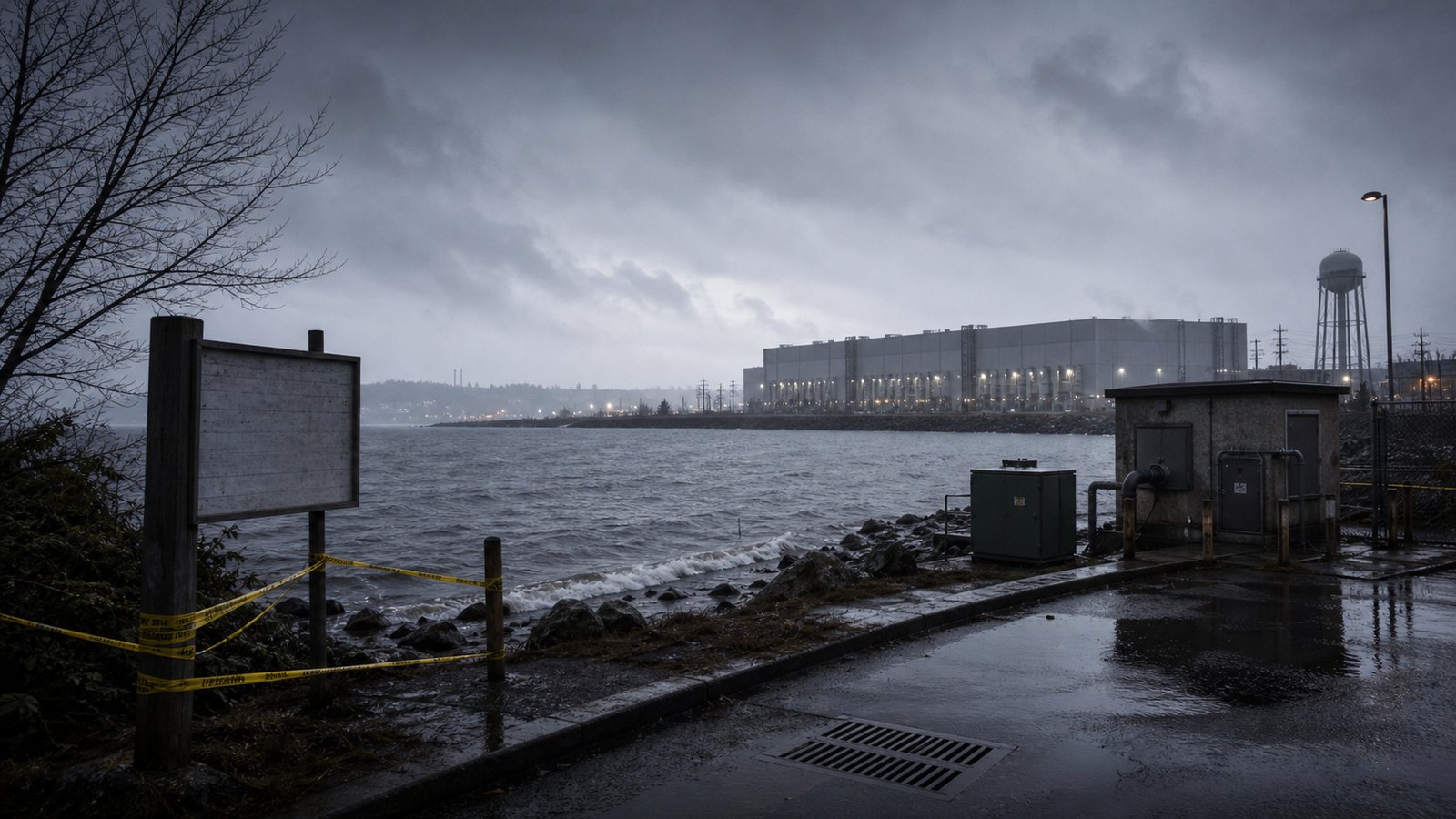
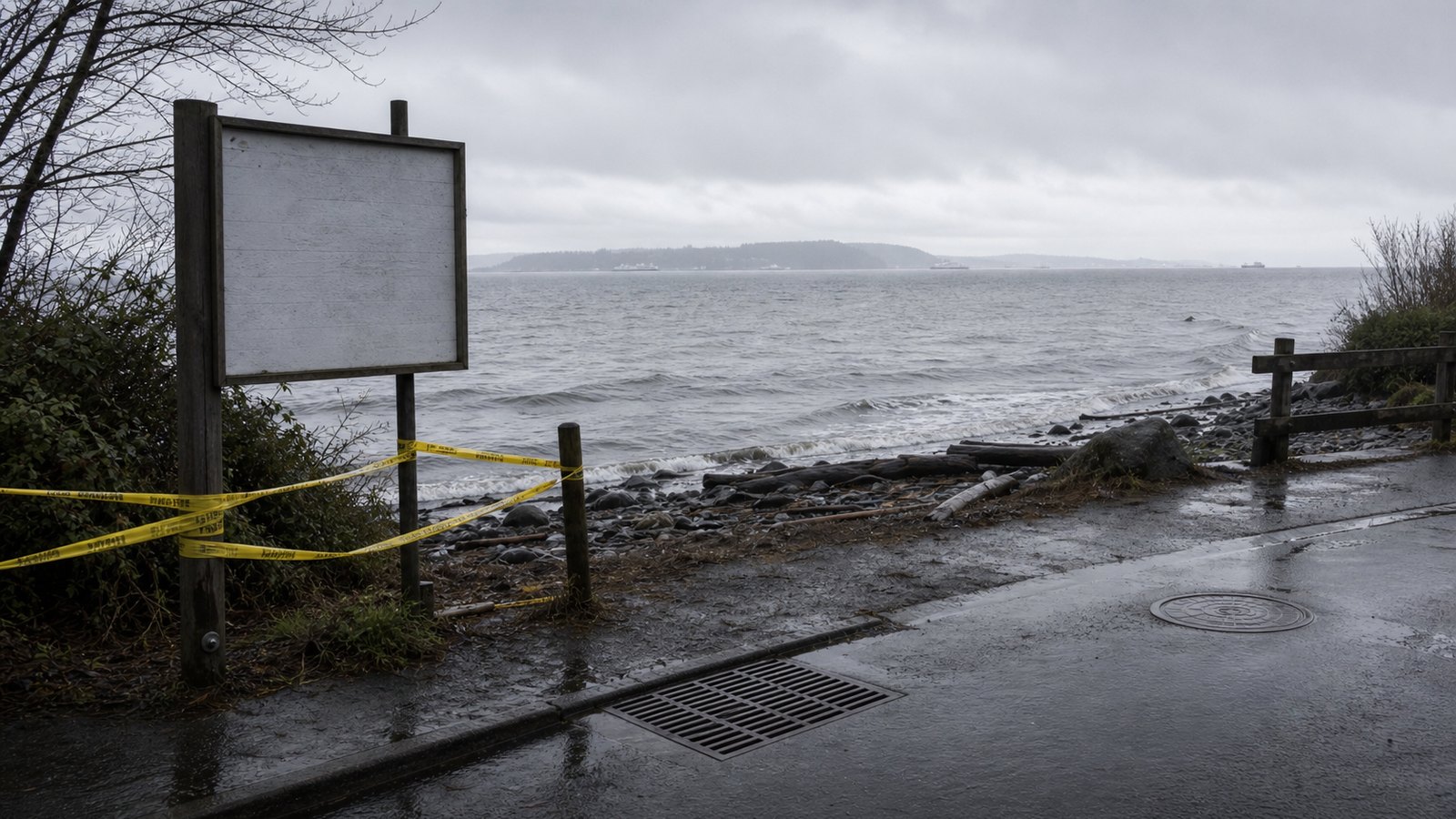
A blank advisory board and caution tape near gray water can look ordinary in the Northwest. After a sewage release, that scene carries a sharper meaning.
The systems under the pavement are part of the Sound. When they work, the beach stays open. When they fail, everyone downstream learns how little distance there really is between a gate in a pump station and the water people love.
Sources & records
Reviewed by Standards Review. Updated June 22, 2026.
- KIRO 7 On The Puget Sound Release
Used for the 13,000-gallon estimate, June 17 leak timing, 63rd Avenue Pump Station location, offshore emergency outfall, and county explanation.
- KIRO 7 Follow-Up On Beach Advisories
Used for the status of Cormorant Cove, Constellation Park, and Charles Richey Sr. Viewpoint after sampling.
- West Seattle Blog Follow-Up
Used for local follow-up on the stay-out-of-water warning, temporary repairs, and neighborhood advisory details.
- King County Alki Standby Generator Project
Used for King County's stated reliability purpose, backup-power project scope, and public explanation of preventing overflows into Puget Sound and nearby waters.