The fight starts with a definition
The grizzly-bear fight now unfolding in Montana starts with a deceptively small bureaucratic move: what counts as secure habitat. Conservation groups say the Trump administration's Fish and Wildlife Service and Forest Service took a benchmark that had treated grizzly secure habitat as patches of at least 2,500 acres and replaced it with a one-acre standard for analysis outside the Northern Continental Divide Ecosystem recovery zone on the Helena-Lewis and Clark National Forest.
That is not a tiny technical edit. For a wide-ranging threatened species, a one-acre patch of quiet forest is not meaningful security. It is a paper square. It can make habitat look protected in a spreadsheet while roads, logging, motorized access, noise, and human conflict eat away at the actual landscape bears need to survive.
The lawsuit names the move
Native Ecosystems Council and Alliance for the Wild Rockies filed a June 2026 federal complaint challenging the agencies' handling of the Larabee Hat Vegetation Project. The complaint alleges the agencies redefined secure habitat so drastically that one acre can count where 2,500-acre patches had been required before.
Western Environmental Law Center, representing the plaintiffs, frames the change as a direct hit to one of the core measures used to protect grizzlies from human disturbance. The groups argue the move lets agencies treat fragmented habitat as secure even when the real-world landscape is being opened to more roads and logging.
The Forest Service project is big
The Forest Service's own final-decision release says the Larabee Hat project area spans 43,158 acres in Powell County, Montana, south of Highway 12 near Elliston. The agency says 17,617 acres are proposed for treatment on National Forest System lands.
The treatment mix includes 3,120 acres of timber harvest, 706 acres of non-commercial thinning, and 13,791 acres of prescribed fire or fuel treatments, according to the Forest Service. The agency says the purpose is to address fuel loading, tree density, forest health, and community wildfire risk.
Roads are the habitat cut
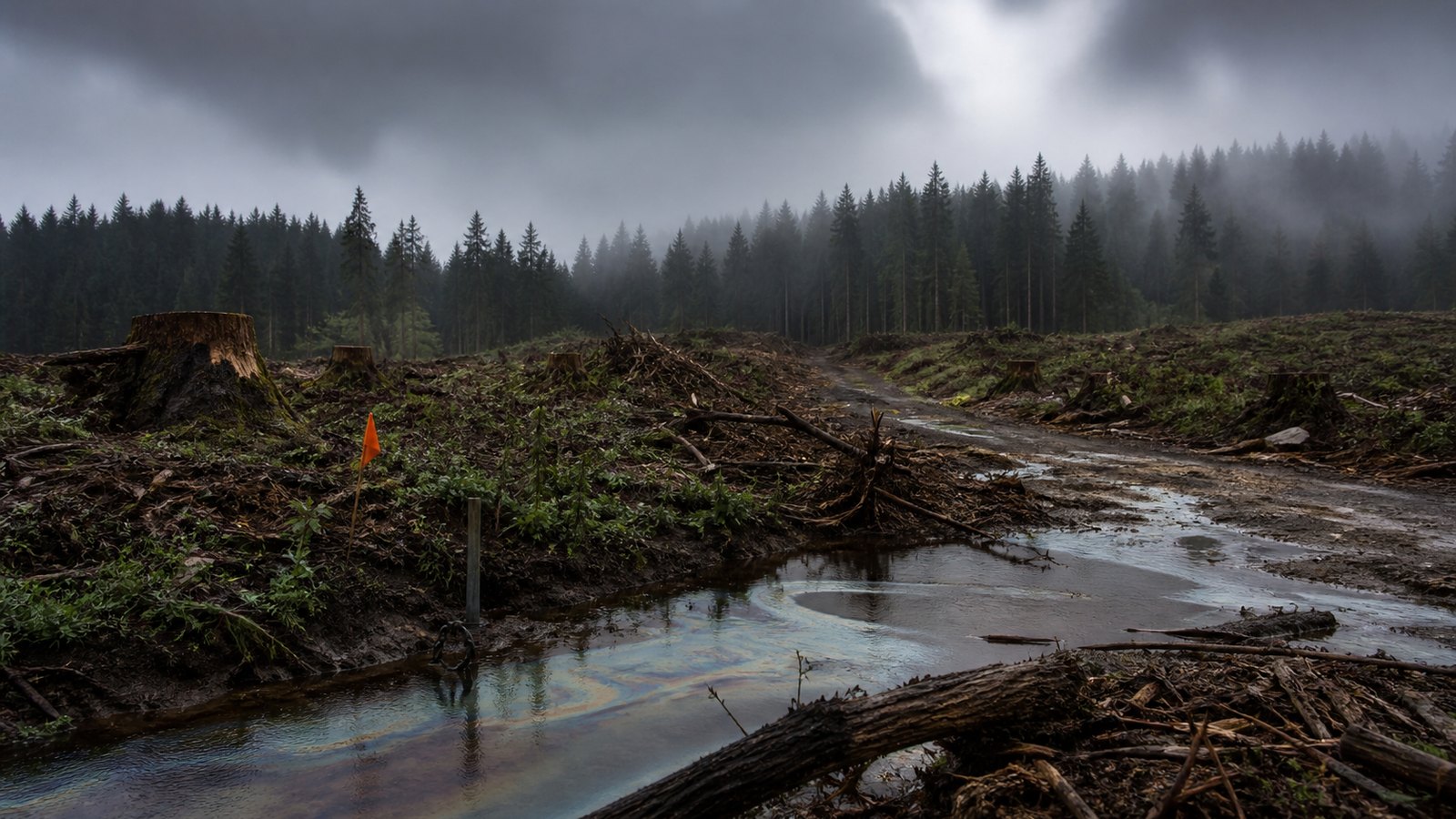
The most important habitat cut is often not the sawblade. It is the road. The complaint alleges the project includes 16.8 miles of new temporary road construction and says the road work will reduce secure habitat for grizzlies.
Roads bring people, vehicles, noise, edge effects, easier future access, easier enforcement problems, and more chances for bear-human conflict. A temporary road can leave a lasting corridor. A closed road can be reopened. A line cut into a forest is hard to make ecologically imaginary again.
Secure habitat is supposed to mean distance from people
Secure habitat exists because grizzlies need places away from roads and regular human disturbance. Bears can move across enormous ranges, but conflict concentrates where humans create access, food attractants, traffic, and surprise encounters.
Calling a one-acre patch secure drains the phrase of ecological meaning. A grizzly cannot build a life around a single acre of technical quiet while the surrounding forest becomes more fragmented. The animal experiences the whole landscape, not an agency label.
The corridor context matters
The lawsuit describes the project area as occupied grizzly habitat and says the area functions as part of a larger connectivity corridor between the Greater Yellowstone Ecosystem and the Northern Continental Divide Ecosystem. Connectivity is the survival architecture for isolated or partially isolated wildlife populations.
Grizzlies do not recover by being trapped inside islands of habitat. They recover when populations can move, disperse, find mates, and adapt across connected landscapes. A corridor carved up by roads and logging is not just a local project footprint; it can weaken the bridge between recovery areas.
The official status is still threatened
The Fish and Wildlife Service lists the grizzly bear as threatened under the Endangered Species Act. That status is supposed to force federal agencies to take habitat, mortality risk, and recovery needs seriously.
The Trump administration has also been managing a broader grizzly rulemaking file in the lower 48. Whatever happens in that rulemaking, the immediate Montana fight shows a practical pathway for weakening protection before a formal delisting fight is even finished: change the habitat math and let the project proceed.
Paper compliance can hide real damage
The ugliest kind of environmental rollback is not always a press conference announcing open season on wildlife. Sometimes it is a table, a definition, a threshold, a map layer, and a sentence saying the agency has complied.
If a 2,500-acre secure-habitat benchmark becomes one acre, the map can look better without the bear being safer. Agencies can still produce analysis. The public can still receive acronyms. The forest can still get roads. The animal gets the bill.
The timber order set the policy weather
This grizzly fight did not appear in a vacuum. In March 2025, Trump signed an executive order on immediate expansion of American timber production. The order directed agencies to increase domestic timber output, reduce permitting delays, and identify steps to streamline consultation and approval.
The accompanying White House fact sheet said the administration would rapidly expand timber production and push quicker Endangered Species Act approvals for forestry projects. That is the policy weather Forest Service projects now move through: production first, wildlife review under pressure, delay treated as the enemy.
Roadless protection is also on the chopping block
USDA has also opened the next step toward rescinding the roadless rule across nearly 45 million inventoried roadless acres within the National Forest System. Those are some of the same kinds of landscapes that matter for wildlife movement, clean water, and refuge from heavy road networks.
Roadless areas are not museum exhibits. They are living infrastructure for species that need distance from constant human disturbance. When an administration attacks roadless protection while also treating timber expansion as urgent national policy, the message to wildlife is brutally simple: move over.
The ESA harm rollback points the same way
FWS and NMFS have proposed rescinding the Endangered Species Act regulatory definition of harm, including language that covers habitat modification. That proposal sits beside the grizzly habitat fight like a warning label.
A government that narrows what habitat harm means, speeds timber approvals, weakens roadless protection, and accepts one-acre secure habitat is not acting confused. It is building a legal and administrative machine that makes it easier to damage habitat while still claiming procedure was followed.
The administration's pattern is not subtle
The grizzly file matches the larger public-lands pattern already visible across logging, roadless policy, predator control, herbicides, and drinking-water protections. Industry receives speed, flexibility, and lowered friction. Wildlife receives smaller boxes and thinner definitions.
The grizzly change lands so hard because it is not an isolated weirdness. It is the same governing instinct applied to a charismatic threatened species: turn habitat into paperwork, turn safeguards into obstacles, turn agency discretion into a permission slip.
There is a difference between forest work and habitat laundering
Not every forest project is automatically bad. Communities face wildfire risk. Some landscapes need careful thinning, prescribed fire, road repair, culvert work, invasive-species control, and restoration. A serious environmental movement has to admit that.
Habitat laundering is different. It happens when agencies use restoration language or wildfire language to carry commercial logging, road-building, and weaker wildlife standards through the door. If the project is truly compatible with grizzly recovery, it should not need a one-acre definition of secure habitat to look safe.
The public deserves the old map and the new map
The agencies should publish a plain comparison showing how much secure habitat exists under the 2,500-acre benchmark and how much exists under the one-acre standard. They should show road density, temporary-road miles, closure plans, enforcement funding, timing restrictions, and expected effects on grizzly movement.
They should also explain why a one-acre secure-habitat standard is biologically defensible for a threatened wide-ranging carnivore. If that explanation cannot survive daylight, the standard should not survive court review or public review.
Our take: one acre is not care
A one-acre secure-habitat standard for grizzlies is an insult dressed as analysis. It treats a threatened animal like a paperwork inconvenience, not a living creature trying to move through a fragmented mountain landscape.
If the administration cared about grizzly recovery, it would be expanding connectivity, reducing conflict, limiting new roads, protecting roadless habitat, and funding coexistence. Instead, the record keeps showing production targets, roadless rollback, habitat-law narrowing, and litigation over a definition so thin it collapses under common sense.
Our take: this is how protection gets gutted
The most effective way to gut environmental protection is not always repeal. It is reinterpretation. Keep the law. Keep the forms. Keep the biological opinion. Keep the public language about stewardship. Then shrink the protective standard until the protected thing can barely fit inside it.
The grizzly case carries that warning in plain view. If one acre can count as secure habitat for a grizzly, every species that depends on space, quiet, water, migration, old forest, or intact corridors should be viewed as next in line.
Our take: animals are paying for a political project
This administration's environmental record keeps choosing extraction over restraint. More timber. Fewer roadless barriers. Narrower habitat harm. More chemical tolerance. More predator-control discretion. Less patience for the living systems that cannot hire lobbyists.
Grizzlies are powerful animals, but they are politically powerless. They cannot attend a hearing, bankroll a campaign, write a white paper, or threaten a senator. Their defense is the law, the science, the public, and the judges willing to say an acre is not a habitat plan.
The question is whether habitat still means anything
The Larabee Hat case asks a larger question than whether one Montana project should proceed. It asks whether habitat protection still has a real-world meaning once agencies are allowed to redefine the core terms.
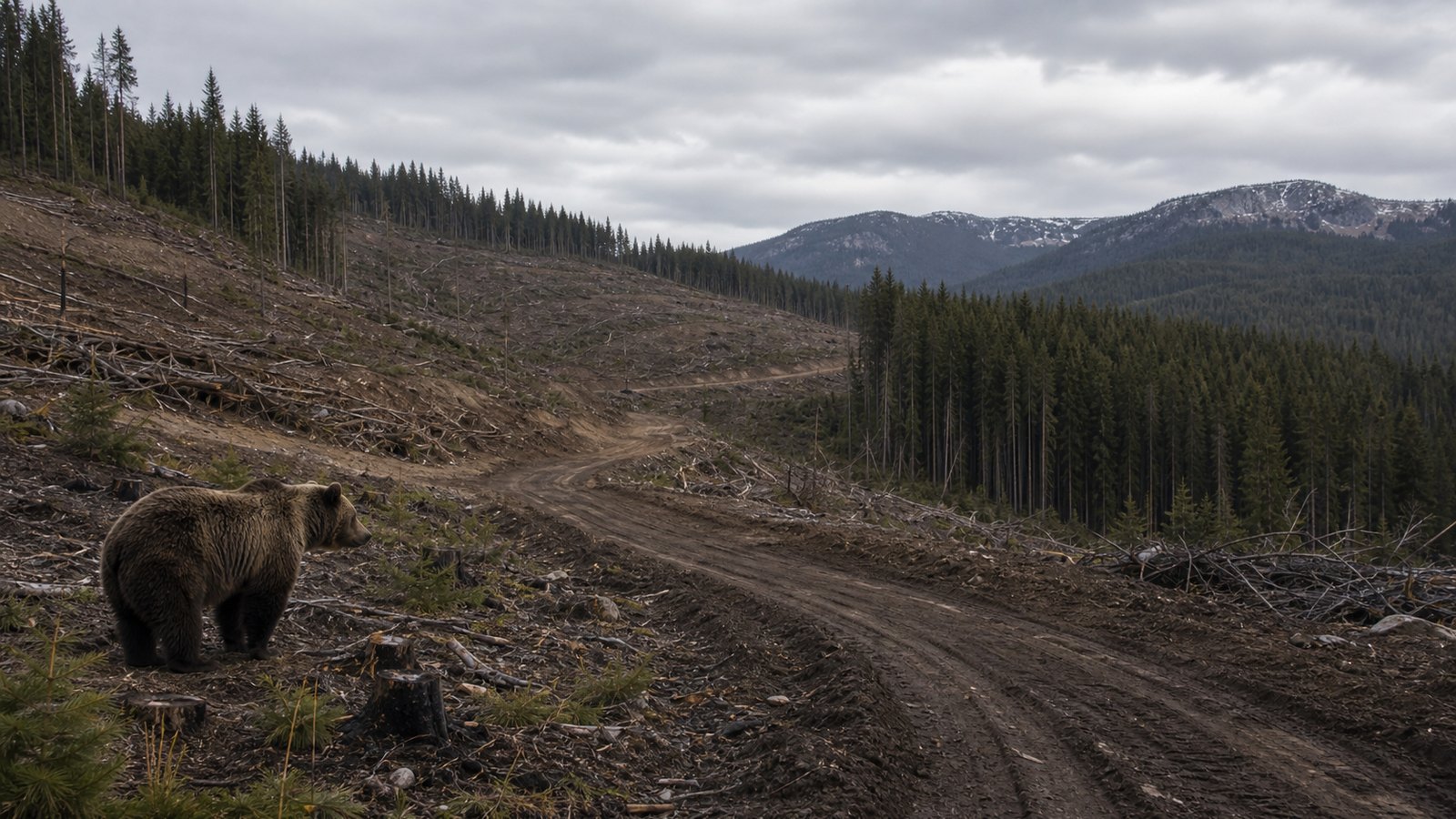
If secure habitat can be reduced from a landscape-scale concept to a one-acre accounting unit, then protection has been hollowed out from the inside. The bear may still be listed. The agency may still produce a decision. The forest may still be called managed. But the animal looking across the logging road knows the truth first.
Sources & records
Reviewed by Standards Review. Updated June 22, 2026.
- Forest Service Final Decision Release
Used for the Forest Service's final Larabee Hat decision date, project area, treatment acreage, timber-harvest acreage, thinning acreage, prescribed-fire acreage, location, and agency framing.
- Forest Service Larabee Hat Comment Notice
Used for project-purpose language, objection record context, and additional Forest Service acreage language for the Larabee Hat proposal.
- Native Ecosystems Council v. Platt Complaint
Used for plaintiffs' allegations about the 2,500-acre to one-acre secure-habitat change, 16.8 miles of temporary road construction, occupied grizzly habitat, roadless and recommended-wilderness context, and ESA/NEPA claims.
- Western Environmental Law Center Release
Used for conservation-group framing of the lawsuit, the claim that the agencies weakened a core grizzly-conservation benchmark, and connectivity-corridor context.
- FWS Grizzly Bear Species Page
Used for the grizzly bear's threatened status under the Endangered Species Act and official species context.
- FWS Grizzly Bear Rulemaking Page
Used for current federal grizzly rulemaking context and recovery-zone framing across the lower 48 states.
- White House Timber Production Executive Order
Used for the administration's March 2025 timber-expansion directives, including domestic timber targets and reduced permitting-delay language.
- White House Timber Fact Sheet
Used for the administration's public framing of timber expansion, Endangered Species Act speed language, and forest-production priorities.
- USDA Roadless Rule Rescission Step
Used for the nearly 45 million-acre roadless-rule rescission figure and the agency's explanation of the rollback process.
- FWS/NMFS ESA Harm Rescission Proposal
Used for the proposed rescission of the ESA regulatory definition of harm, including habitat-modification language.