Start with the address
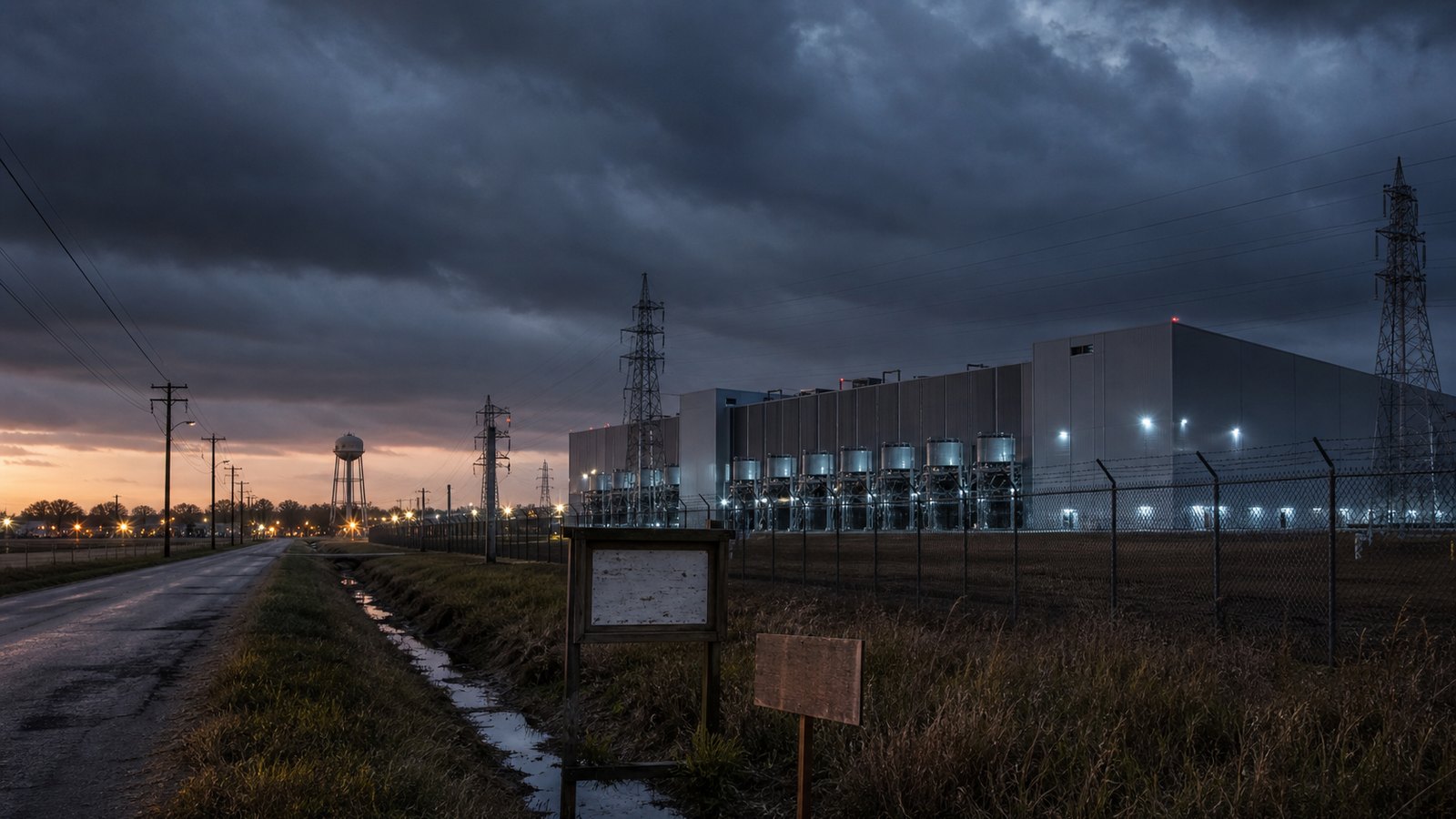
The address in the public record is 1645 Railroad Avenue, Saint Helens, Oregon. Oregon Building Codes Division vessel records list Upland Data Center LLC at that location, with RestorCap Development LLC as the responsible party and five permits per site.
City planning records add context. A St. Helens Planning Department activity report from October 2024 said the Armstrong World Industries site had been purchased by Upland Data Center LLC and that the city had preliminary discussions about a data center there.
The site has a long industrial past
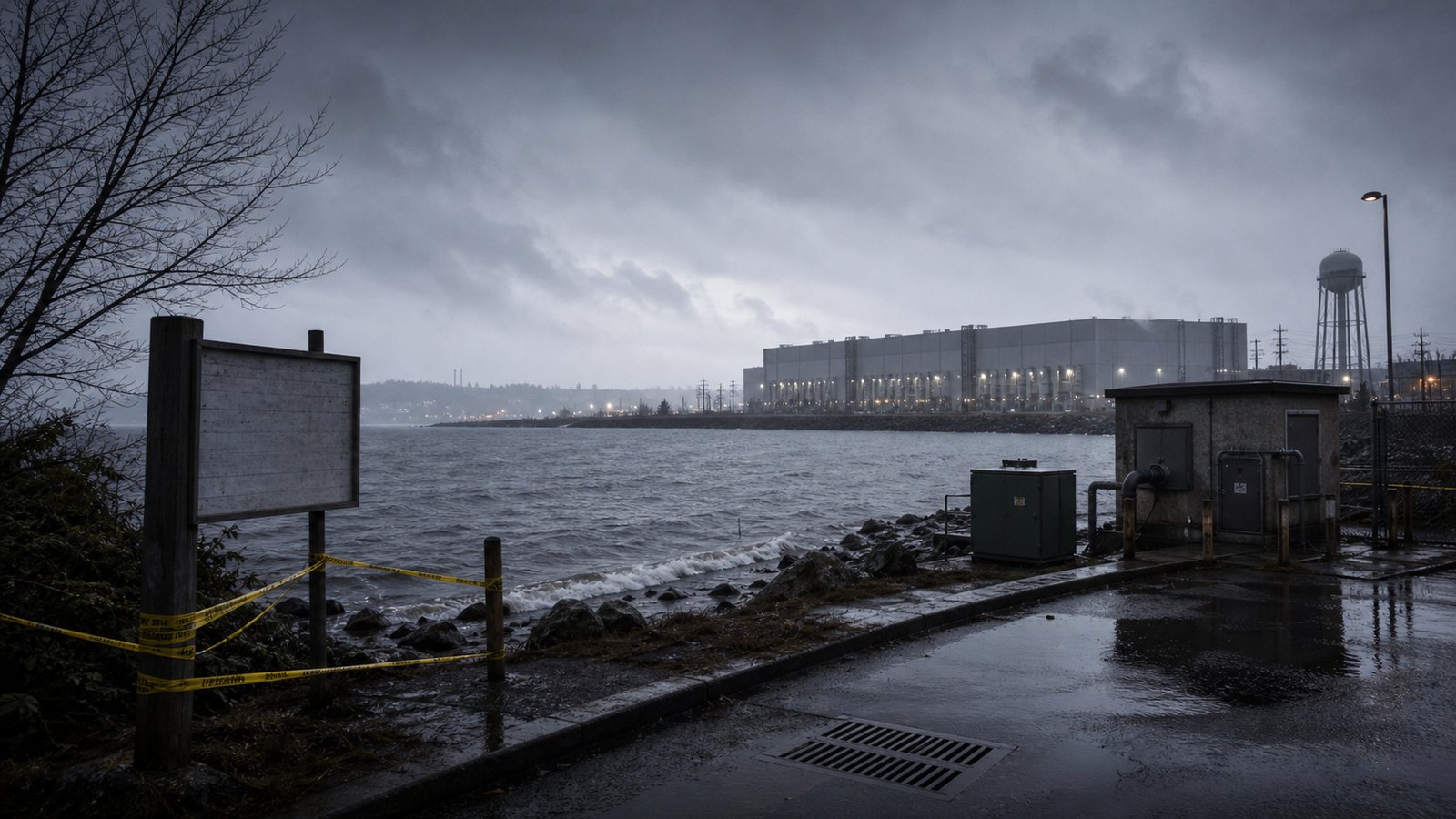
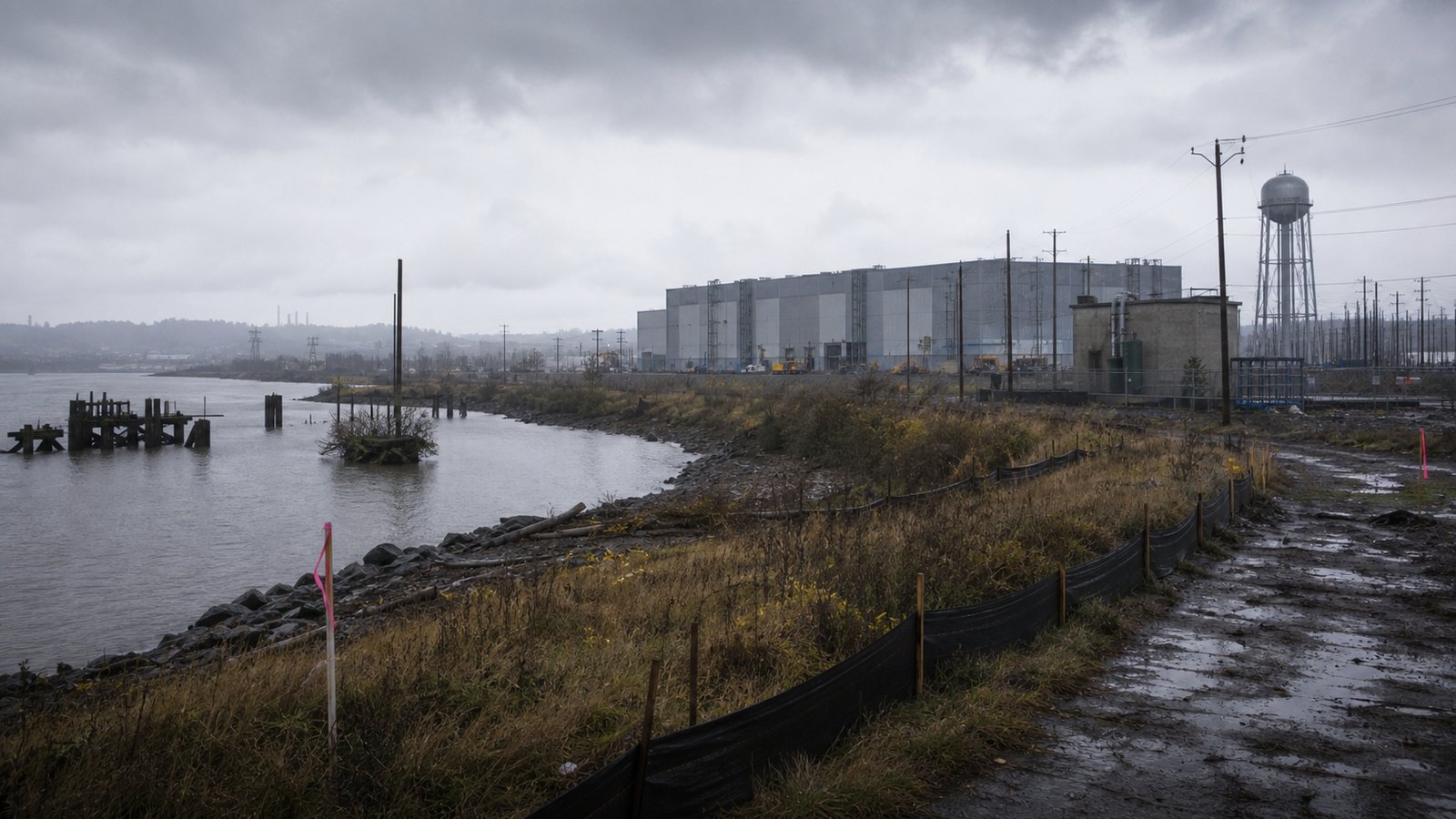
Oregon DEQ describes the former Armstrong World Industries property as a 175-acre site along Scappoose Bay, about one mile south of St. Helens. The facility made fiberboard products from 1929 until it closed in 2018.
That history is not background color. DEQ says several decades of industrial wastewater discharge into nearby wetlands and Scappoose Bay left contamination in soil and sediment. Any redevelopment pitch has to begin there, because the land is carrying the record of its previous industrial use.
The contaminants are named
DEQ's cleanup fact sheet names dioxins and furans, metals such as arsenic and mercury, and polycyclic aromatic hydrocarbons. It also warns that contaminants in in-water sediment can build up in fish, clams, and crayfish.
That makes the cleanup a human-health and ecological question, not a cosmetic site-prep exercise. Scappoose Bay, wetlands, fish, wildlife, subsistence use, recreation, and future industrial activity all sit in the same record.
The lowland cleanup is large
DEQ says the interim lowland removal action will remove about 52,000 cubic yards of heavily contaminated soil, sediment, and wood waste across a 10-acre portion of the lowland. Construction is expected to start in spring 2026 and be completed in 2028.
That schedule should shape the development conversation. A community should not be asked to bless a data-center buildout as a clean economic-development win while the cleanup of the former industrial site is still moving through major construction.
Upland ownership changes the stakes
DEQ says the property is now owned by Upland Data Center LLC and remains vacant pending future redevelopment. The company name itself tells residents why the cleanup record and the development record need to be read together.
A contaminated site can be redeveloped responsibly. It can also become a leverage machine, where officials accept a heavy industrial user because the alternative is a vacant polluted property. St. Helens should refuse that trap. Cleanup is mandatory; approval of a specific data-center buildout is a separate decision.
The sewer system is already part of the plan
A St. Helens wastewater capacity amendment for Pump Station 7 says the current firm capacity is 310 gallons per minute and the wastewater master plan recommends increasing it to 1,400 gallons per minute.
The same document says the existing pump station is located at 58369 Old Portland Road, within an easement on a parcel owned by Upland Data Center LLC. The replacement station scope includes new sewage pumps, a wet well, stormwater handling, power upgrades, and a permanent standby generator.
Wastewater capacity is public power
A pump station expansion is not a minor footnote when a major industrial user is in the same record. Wastewater capacity decides who can build, how fast land can develop, how much risk the city accepts, and who pays when infrastructure has to grow.
Residents should know how much of the proposed Pump Station 7 capacity is tied to existing public need, how much is tied to future industrial growth, and how much would be effectively reserved for a large private facility if the data-center project advances.
The water numbers cannot stay vague
Oregon's Data Centers and Water dialogue draft says the state currently lacks aggregate data on data-center water use. It also says facility-level industrial water use may be treated as business information and rolled into broader city water or wastewater reporting.
That data gap is exactly why St. Helens should demand project-specific disclosure before momentum hardens. A town cannot evaluate a large data center through vibes, renderings, and job promises. It needs gallons, megawatts, discharge volumes, cooling methods, and enforceable limits.
Cooling technology decides the burden
The Oregon water draft explains that data centers can use different cooling systems, including closed-loop designs that generally use less water and open-loop or evaporative designs that can use more. The choice affects water withdrawals, wastewater discharge, cost, and resilience during heat and drought.
St. Helens should require Upland to disclose the planned cooling design before any serious local approval. If the answer is not ready, the project is not ready. If the answer is confidential, the public review is broken before it starts.
Discharge chemistry belongs in the record
Cooling water is not automatically harmless because servers are digital. The Oregon draft notes that water used in cooling can pick up residues from anti-corrosion chemicals, metals, or infrastructure before it enters a wastewater system.
The city should require a plain-language wastewater chemistry profile. What will enter the municipal system? What pretreatment is required? What monitoring will occur? Who pays for additional treatment if the discharge profile changes? Who is liable if assumptions are wrong?
Power demand is a water story too
Oregon's Data Center Advisory Committee is reviewing unprecedented demand from large-scale energy users including data centers and artificial intelligence. Its charge includes ratepayer protection, siting, land use, natural-resource protection, and water impacts.
Electricity and water meet in the same machinery. Cooling needs power. Pump stations need power. Backup generators need fuel. Utility upgrades can push costs onto households if regulators and city officials do not draw hard lines early.
Ratepayers need protection before promises
OPB reported that Oregon regulators moved under the POWER Act to make PGE data-center customers and other large industrial users pay more for electricity access after concerns that data-center growth was shifting costs onto ordinary customers.
St. Helens should apply the same principle locally. If a private data center requires upgrades to water, sewer, stormwater, roads, emergency response, or power service, the company should pay. Public households should not become the silent financing arm for a private infrastructure-heavy project.
The public deserves a complete map
The documents are scattered across state cleanup records, vessel-permit records, city planning reports, wastewater amendments, Oregon energy pages, and media coverage. That fragmentation benefits insiders who know where to look.
The city should publish a single project portal with every relevant document: land-use filings, cleanup schedules, water estimates, wastewater capacity analysis, utility commitments, floodplain review, public comments, tax discussions, development agreements, and consultant reports.
Questions for the company
Upland Data Center LLC and RestorCap Development LLC should answer direct questions. Who is the intended end user or tenant? What is the planned campus size? What is the peak power demand? What cooling system is planned? What water source is planned? How much wastewater will be discharged?
They should also disclose backup generation, fuel storage, expected generator runtime, stormwater controls, construction truck routes, hazardous materials, public incentives, utility-upgrade needs, and whether they will sign binding agreements to cover infrastructure costs created by the project.
Questions for city officials
St. Helens officials should explain how Pump Station 7 capacity will be allocated, how developer contributions will be calculated, how ratepayer risk will be blocked, how cleanup milestones affect redevelopment timing, and how residents can challenge assumptions before approval.
They should also say whether housing, small businesses, and existing residents are being protected from capacity capture. A city can quietly give away its future by letting one large user dominate the infrastructure plan.
Questions for state officials
Oregon officials should explain how the state's data-center advisory work applies to a project like St. Helens. If Oregon lacks aggregate data-center water-use data, every major proposal becomes a test case for disclosure.
State regulators should also say how cleanup, water withdrawals, wastewater discharge, wetlands, fish advisories, power demand, and ratepayer protections will be coordinated. A project with this many overlapping systems should not be reviewed in isolated lanes.
Our take: no approval without numbers
St. Helens should not approve a data-center redevelopment package until the hard numbers are public: water demand, wastewater discharge, power demand, backup generation, stormwater load, infrastructure cost, cleanup milestones, tax terms, and emergency-response burden.
If those numbers are favorable, Upland can publish them. If the company will not publish them, residents should assume the community is being asked to carry risk without seeing the ledger.
Our take: cleanup is not permission
Redeveloping a damaged industrial site can be better than leaving it vacant and polluted. No developer gets a free pass from that fact. Cleanup is a floor, not a permission slip.
The old Armstrong record should make review stricter, not softer. A site with industrial wastewater history, contaminated sediment, fish and wildlife concerns, and ongoing lowland removal work deserves more public scrutiny than a generic industrial pad.
Our take: the town needs veto power
Public participation is not a ceremonial meeting after consultants and officials have already decided the project should happen. It means residents can change the outcome.
If St. Helens will live with the water demand, sewer demand, noise, generators, construction disruption, utility risk, and riverfront transformation, St. Helens needs a real veto point. A data center may be profitable. Profit is not a civic mandate.
The record is enough to pause
The known record already justifies a pause: former industrial contamination, 52,000 cubic yards of planned lowland removal, fish and wildlife risk language, a major pump-station capacity plan, a statewide water-data gap, and a proposed high-load industrial user tied to the site.
The burden now belongs on the developer and public officials. Show the whole map. Publish the numbers. Protect ratepayers. Tie approval to cleanup. Put water and wastewater first. If the project cannot survive that standard, it should not survive public review.
Sources & records
Reviewed by Standards Review. Updated June 22, 2026.
- Oregon Building Codes Division Vessel Site
Used for the Upland Data Center LLC site listing, 1645 Railroad Ave address, responsible-party listing, and five vessel permits.
- Oregon DEQ Former Armstrong Cleanup Fact Sheet
Used for site ownership, former industrial use, contamination categories, 175-acre property description, fish and wildlife risk language, 52,000-cubic-yard cleanup volume, and 2026-2028 construction window.
- EPA Armstrong World Industries Site Profile
Used for the EPA profile at 1645 Railroad Avenue, state-led cleanup status, and EPA ID ORD093476109.
- St. Helens Planning Department Activity Report
Used for the October 2024 city planning report saying the former Armstrong site was purchased by Upland Data Center LLC and that city officials had preliminary data-center discussions.
- St. Helens Pump Station 7 Amendment
Used for Pump Station 7 capacity planning, Upland-owned parcel language, standby generator planning, stormwater handling, and 60-percent design scope.
- Oregon Data Centers And Water Dialogue Draft
Used for Oregon's data-center water transparency gap, water and wastewater planning concerns, cooling-water discussion, and examples of large data-center water demand.
- Oregon Data Center Advisory Committee
Used for Oregon's review of unprecedented data-center electricity demand, ratepayer affordability, land-use and water-resource concerns.
- Oregon Data Center Advisory Committee Charge
Used for the committee charge language on siting criteria, ratepayer protection, water protection, and environmental impacts.
- OPB On Oregon Data Center Power Costs
Used for Oregon ratepayer and large-load power-cost context, including PGE data-center rate changes under the POWER Act.