September 14: Nesvik narrows the meaning of killing protected wildlife
On September 14, 2026, U.S. Fish and Wildlife Service Director Brian Nesvik signed a memorandum telling his agency to interpret the Endangered Species Act's prohibition on taking wildlife around conduct purposefully directed at particular animals. In his example, cutting down a tree occupied by bats falls outside that prohibition unless killing or capturing the bats is the purpose of felling it.
The directive, published by the Center for Biological Diversity and reported by the Associated Press, places the former Wyoming wildlife chief at the center of a national fight over how much protection an endangered animal retains when it stands in the way of another activity.
Nesvik is also the official who led Wyoming Game and Fish when Cody Roberts' treatment of an injured wolf initially produced a $250 wildlife citation. Roberts later pleaded guilty to felony animal cruelty. The man Trump appointed is Nesvik, the former agency director, not Roberts, the defendant.
A review of Nesvik's public career and federal ethics filings reveals an experienced wildlife officer and military commander who entered Washington with an explicit deregulatory agenda, continuing financial interests in ranching and real estate, and established relationships with state wildlife agencies. His decisions now reach far beyond Wyoming's predator laws.
A wildlife degree, a warden's career, and command of the Wyoming Guard
Nesvik's official USFWS biography describes a career rooted in Wyoming. He graduated from the University of Wyoming in 1994 with a degree in wildlife and fisheries biology and management, then joined Wyoming Game and Fish in 1995. He worked in wildlife law enforcement before advancing to regional supervision and, in 2011, chief game warden.
He served in the Army National Guard alongside that civilian career, deployed twice to the Middle East, reached brigadier general, and retired from the military in 2021 after 35 years. Governor Mark Gordon appointed him Wyoming Game and Fish director in March 2019. He retired from the department in September 2024.
Those credentials complicate any portrayal of Nesvik as an outsider unfamiliar with conservation. He has formal wildlife training and decades inside the institutions that manage animals, hunting, habitat and conflict with people.
In his March 26, 2025, Senate opening statement, Nesvik emphasized migration corridors, invasive-species prevention and collaboration with ranchers, farmers, hunters and tribes. He presented field experience as preparation for federal leadership. The dispute over his tenure concerns the uses of that experience, rather than its existence.
April 2024: the agency defended the initial wolf-case response
Cowboy State Daily's April 8, 2024, interview with Nesvik captured the department's position during the Roberts controversy. Nesvik said the agency was navigating a state confidentiality provision covering wolf-taking records and a flood of public-records requests. He rejected the suggestion that the department was deliberately hiding information.
He also defended the legal distinction behind the initial penalty: in that part of Wyoming, killing a wolf classified as a predatory animal was permitted, while possessing the live animal violated wildlife rules. The department's view was that the applicable wildlife offense was a misdemeanor.
Nesvik said Game and Fish did not enforce animal-cruelty statutes. But Sublette County Attorney Clayton Melinkovich told the same publication that cruelty provisions could apply to predators in some circumstances. The prosecutor was already leaving open a possibility that the agency's public explanation had largely closed.
Administrative responsibility and criminal responsibility belong to different people here. Roberts committed the conduct. Nesvik led the department explaining its initial response. The public controversy concerned both the suffering of the wolf and whether the state was interpreting its authority too narrowly.
The felony case went beyond the original $250 citation
WyoFile's court reporting places Roberts at the Green River Bar in Daniel with the injured wolf on February 29, 2024. Prosecutor Melinkovich later described Roberts carrying the animal outside and shooting it. On March 5, 2026, Roberts pleaded guilty to felony animal cruelty.
WyoFile reported that Judge Richard Lavery sentenced him on April 8 to 18 months of probation, with a prison term suspended. The prosecution and sentence occurred after Nesvik had left Wyoming Game and Fish. They cannot be credited to, or treated as orders issued by, his federal office.
The felony outcome nevertheless undercuts the impression that the state's response necessarily had to end at a possession citation. A separate prosecutorial process ultimately treated the conduct as criminal cruelty. The original agency explanation was not the final legal resolution.
There was also a documented commercial connection between Roberts and the state. Cowboy State Daily reported in May 2024 that C Roberts Trucking had received roughly $120,000 through Game and Fish and transportation-agency contracts from 2020 through 2024.
Game and Fish spokeswoman Breanna Ball told the outlet that his company was one of four local trucking contractors used for river-restoration work, that procurement rules had been followed, and that no additional work was pending under the contract. The reported payments establish a vendor relationship; they establish neither a personal arrangement with Nesvik nor a payment for lenient enforcement.
March 2025: deregulation was part of the job pitch
Nesvik told senators that Trump's agenda offered opportunities to simplify regulations, accelerate permitting through technology and rely more on education and voluntary compliance. He explicitly aligned himself with Interior Secretary Doug Burgum's preference for innovation over regulation.
He also promised candid communication, transparency and responsiveness to Congress. The opening statement, published by the Interior Department, offered both commitments together: fewer regulatory obstacles and an accountable agency serving wildlife, fish and plants.
The Senate confirmed him 54-43 on August 1, 2025. The roll call included Democratic Senators Martin Heinrich and Jacky Rosen among the supporters, as well as Wyoming Republicans John Barrasso and Cynthia Lummis. His official biography dates the start of his duties to August 18.
The appointment placed a former state manager in charge of a federal institution whose responsibilities are different in scale and purpose. Decisions once argued within Wyoming's political system would now influence protections across state lines and the management of nationally held wildlife lands.
The financial disclosures include cattle and rental property
ProPublica's collection of federal financial disclosures lists Nesvik Cattle Company LLC and LAS Properties LLC among Nesvik's outside business interests. His nominee disclosure reported the cattle interest in a $100,000-to-$250,000 range and the multifamily rental-property interest in a $1 million-to-$5 million range. These are disclosure brackets, not precise valuations or a calculation of personal net worth.
The accompanying March 9, 2025, ethics agreement is more informative than a list of holdings alone. Nesvik committed to resign as managing member and registered agent of both companies while retaining financial interests and receiving passive income. His spouse would operate the cattle business.
For both companies, he agreed not to participate personally and substantially in particular matters he knew would directly and predictably affect their financial interests without a written waiver. That is a continuing conflict-management obligation, not an assertion that owning a ranch automatically disqualifies a wildlife official.
The distinction between management and ownership is consequential. Leaving daily operations to someone else can separate an official from business decisions while leaving the household financially exposed to government decisions affecting the business. The agreement recognizes that problem by requiring restrictions on official participation.
A conservation contract and a later compliance certification
Nesvik's ethics agreement also disclosed a three-year contract he personally entered in 2023 with the Agriculture Department's Natural Resources Conservation Service. It covered conservation practices on land owned by Anderson Angus Beef, a family limited partnership in which his spouse held a passive interest, and leased by the cattle company.
The agreement required him to forfeit further payments and refund amounts determined by NRCS unless the agency approved a contract modification reflecting his spouse's new management role. It therefore addressed a specific federal financial relationship, in addition to general promises about conflicts.
In a compliance certification signed November 18, 2025, Nesvik stated that NRCS had approved that modification before he assumed his federal duties. The certification also says he completed required resignations and divestitures. It is his formal representation of compliance, not an independent audit of every subsequent decision.
The same certification records limited August 26 authorizations to participate in certain matters involving Wyoming Game and Fish and two wildlife-agency associations. It separately indicates that he had not received a financial-conflict waiver under 18 U.S.C. 208. Those are different categories of ethics clearance; permission concerning a former institutional relationship is not blanket permission to act for a retained business interest.
His March agreement required sales of interests in Alphabet, Amazon, Intel, Meta, Nvidia and Polaris. The subsequent certification reports completion of the agreed divestitures. Describing every holding in the original nominee filing as a current investment would misrepresent that later document.
Grizzly policy remains a fight over authority, not a completed delisting
Nesvik's preference for state control was established before Trump appointed him. Associated Press reporting on his nomination noted his push as Wyoming director to remove federal protections for grizzly bears. Supporters describe delisting recovered populations as a conservation success and a return of management to states.
In July 2026, USFWS proposed revised protections under section 4(d) of the Endangered Species Act, including greater management flexibility as conservation plans and population objectives are met. The service describes the proposal as a framework for managing conflict in areas where recovery has progressed.
The agency's explanatory document says lower-48 grizzlies remain threatened and that the proposal is not a delisting action. It describes a tiered approach that would give states, tribes and national parks additional authority. The service's rulemaking page, reviewed September 25, says no final rules have been published for these proposals.
Keeping an animal listed and retaining every existing restriction are separate policy choices. A species-specific rule can change permissible management while the threatened designation stays in place. Equally, a proposed rule has not yet become an operative permission simply because a press release celebrates its expected effects.
USFWS acknowledges in its July questions and answers that courts overturned earlier efforts to delist the Greater Yellowstone population. The recurring dispute concerns whether the protections remaining after a change will sustain recovery, rather than whether recovery has occurred anywhere at all.
Colorado's wolf program met a different version of state control
In October 2025, Nesvik intervened in Colorado's wolf-restoration program. The Associated Press reported that his October 10 letter directed Colorado to stop efforts to obtain wolves outside designated Northern Rocky Mountain areas, complicating a planned transfer from British Columbia.
Colorado Parks and Wildlife disputed the interpretation. In its January 16, 2026, response to a subsequent federal letter, Acting Director Laura Clellan said the governing rule did not prohibit Canadian sourcing. She argued that a preferred donor population identified in explanatory material was being treated as a binding geographic restriction.
Clellan's letter also said federal staff had previously coordinated with Colorado and confirmed that importing Canadian gray wolves required no federal authorization from USFWS. Her account presents a dispute over the meaning of an existing rule and earlier agency guidance, not an admission that Colorado secretly evaded a known prohibition.
Alamosa Citizen's account of Colorado's 2025-26 annual wolf report says the state abandoned a planned January 2026 British Columbia capture effort after receiving Nesvik's letter. Attempts to secure alternative suppliers were unsuccessful. A dispute over wording therefore had practical consequences for additional releases.
The contrast deserves scrutiny: deference to states can support loosening federal predator protections, yet federal authority can also constrain a state's effort to restore predators. Neither a state nor Washington is inherently on the side of conservation. The outcome depends on which action the government permits or prevents.
July's public assurance and September's narrower instruction
On July 10, the Interior and Commerce departments announced the rescission of the regulatory definition of harm under the Endangered Species Act. The administration described the change as relief from overreach, permitting burdens and uncertainty for landowners and businesses.
The announcement nevertheless promised: "Actions that directly injure or kill listed wildlife will continue to be prohibited." Nesvik endorsed the reform in the same release. Existing permits and incidental-take statements would remain valid, the departments said.
The Government Accountability Office recorded publication of the final rule on July 14 and its stated September 14 effective date. GAO also flagged that the stated date was less than the required 60 days after congressional receipt under the Congressional Review Act. Its procedural review was not a judicial ruling invalidating the regulation.
Nesvik's September 14 implementation memo then focused on whether an action was directed at an animal, rather than treating every direct injury as sufficient. Its tree-and-bats example illustrates the difference between an assurance that direct killing remains prohibited and an instruction that can exclude killing incidental to another purpose.
Associated Press reported that Interior defended the guidance as implementing the new harm rule and said the statute continued to prohibit conduct such as hunting, shooting and trapping protected wildlife. Conservation groups dispute how much of the old protection survives that interpretation.
A Supreme Court dissent supplies the memo's framework
The four-page memo repeatedly invokes Justice Antonin Scalia's dissent in Babbitt v. Sweet Home Chapter of Communities for a Great Oregon. In 1995, the Supreme Court upheld the regulation allowing qualifying habitat modification that actually kills or injures wildlife to count as harm. Scalia was on the losing side of that 6-3 decision.
Nesvik's document adopts the dissent's focus on purposeful actions against living individual animals. It also distinguishes that interpretation of take from the separate knowledge requirements governing criminal and enhanced civil penalties. The directive is more elaborate than a universal declaration that anyone may kill any endangered animal.
Stateline's September 21 reporting described warnings from conservation lawyers that the approach could weaken the incentive for developers to obtain incidental-take permits. The same reporting noted potential citizen lawsuits against projects relying on the new interpretation. An agency's promise of narrower enforcement cannot guarantee that a court will accept its reading of the law.
California Attorney General Rob Bonta announced on September 9 that a coalition of 21 attorneys general had filed two lawsuits challenging the harm rollback and other endangered-species rules. Those complaints predate the September 14 memo. The states allege statutory and administrative-law violations; the allegations are not court findings.
The administration argues that the earlier interpretation exceeded the statute. Its opponents argue that habitat destruction and foreseeable wildlife deaths cannot be separated from meaningful protection. The dispute now places an agency director's implementation choices alongside the broader legal contest over the regulations themselves.
The refuge review reaches a depleted agency
Nesvik's December 16, 2025, Director's Order 230 required a comprehensive review of the National Wildlife Refuge System and National Fish Hatchery System. It called for scrutiny of mission alignment, staffing, money, infrastructure and organizational efficiency, including facilities established for purposes that might no longer fit the mission.
The order set January 5 and February 15, 2026, deadlines for initial recommendations and detailed results. An administrative amendment on March 31 removed the order's expiration date. This was an agency-wide review directive, not a document itself authorizing a sale of all refuge lands.
In a January hearing covered by MeatEater, Nesvik said the review was not intended to find land to sell. He also discussed congressionally authorized exchanges. Asked to identify a refuge whose purpose no longer matched the mission, he offered no specific example, according to the outlet's account.
The agency conducting that review had substantially fewer staff. The Center for Biological Diversity reported on September 2 that rosters obtained through public-records requests showed staffing fell from 9,957 in 2024 to 6,333 in 2026, a reduction of about 36 percent. The organization said more than 1,900 lost positions were scientists, including biologists, foresters and fire managers.
The center, which opposes the administration's policies, based its figures on agency staff rosters. Its comparison begins before Nesvik took office and cannot establish who authorized each departure. The reported reduction spans the administration's staffing changes, rather than just his tenure.
On September 23, Senators Adam Schiff and Sheldon Whitehouse demanded answers about staffing and the review. Their letter says an earlier December inquiry remained unanswered and that Congress still had received little information about the review's conclusions.
Our Take: conservation needs enforceable obligations
Nesvik's September directive exposes a fundamental weakness in the administration's conservation pitch. Wildlife protection cannot depend chiefly on whether someone wanted a dead animal, as opposed to wanting the timber, development opportunity or other benefit from an activity that kills it. A species cannot recover on the distinction between an intended casualty and an acceptable casualty.
There are legitimate questions about regulatory scope. An agency should explain which conduct is prohibited, how causation is established, and how a landowner can comply. Unclear rules and arbitrary enforcement deserve correction. But predictability can be achieved through clear standards and workable permits. Shrinking the category of harm is a different political choice, with different beneficiaries.
The costs do not disappear when a permit becomes unnecessary. They can move from a project budget to wildlife populations, neighboring communities and future restoration efforts. Calling the removal of a requirement an efficiency gain accounts for the applicant's burden while leaving the ecological cost outside the calculation.
The Wyoming episode offers a smaller, stark example of how classification shapes institutional response. A suffering wolf became, initially, a live-possession violation within a predator-management framework. The later felony prosecution demonstrates the value of an independent route to accountability. Public outrage was not a substitute for law; it helped expose how unsatisfactory the first official response was.
Nesvik's experience makes his choices more consequential. He cannot fairly be dismissed as someone who has never worked around wildlife. His background instead raises expectations that he will understand how enforcement, habitat and staffing interact. A technically sophisticated retreat can be more effective than an uninformed attack on an agency's mission.
His business interests warrant continuing scrutiny, but ownership alone cannot establish corruption. The ethics agreement and later certification deserve consideration together. Accountability requires examining compliance with recusals, the scope of authorizations and whether decisions affecting retained interests receive appropriate review. A disclosure form starts that scrutiny; it cannot replace it.
A credible wildlife agency should publish the basis for consequential decisions, answer congressional oversight and retain enough expertise to implement its obligations. Conservation requires more than celebrating hunting access, private stewardship or recovered populations. It requires the willingness to impose limits when voluntary cooperation fails.
Our judgment is that the September enforcement approach shifts too much risk onto protected wildlife. The administration presents narrower regulation as compatible with conservation; its officials should be required to demonstrate that compatibility through enforceable protections and measurable results, rather than asking the country to accept the assurance on trust.
October 7 is the senators' requested response date
As of September 25, the service's grizzly page still labels its revisions as proposals, the states have filed their challenges to the endangered-species rollbacks, and Nesvik's September memo sets out his agency's interpretation of take. These are separate proceedings with separate legal consequences.
Schiff and Whitehouse's September 23 letter requests the staffing answers and refuge-review conclusions by October 7, 2026. That is the oversight deadline the senators have set for Nesvik's response.
Sources & records
Reviewed by Standards Review. Updated September 25, 2026.
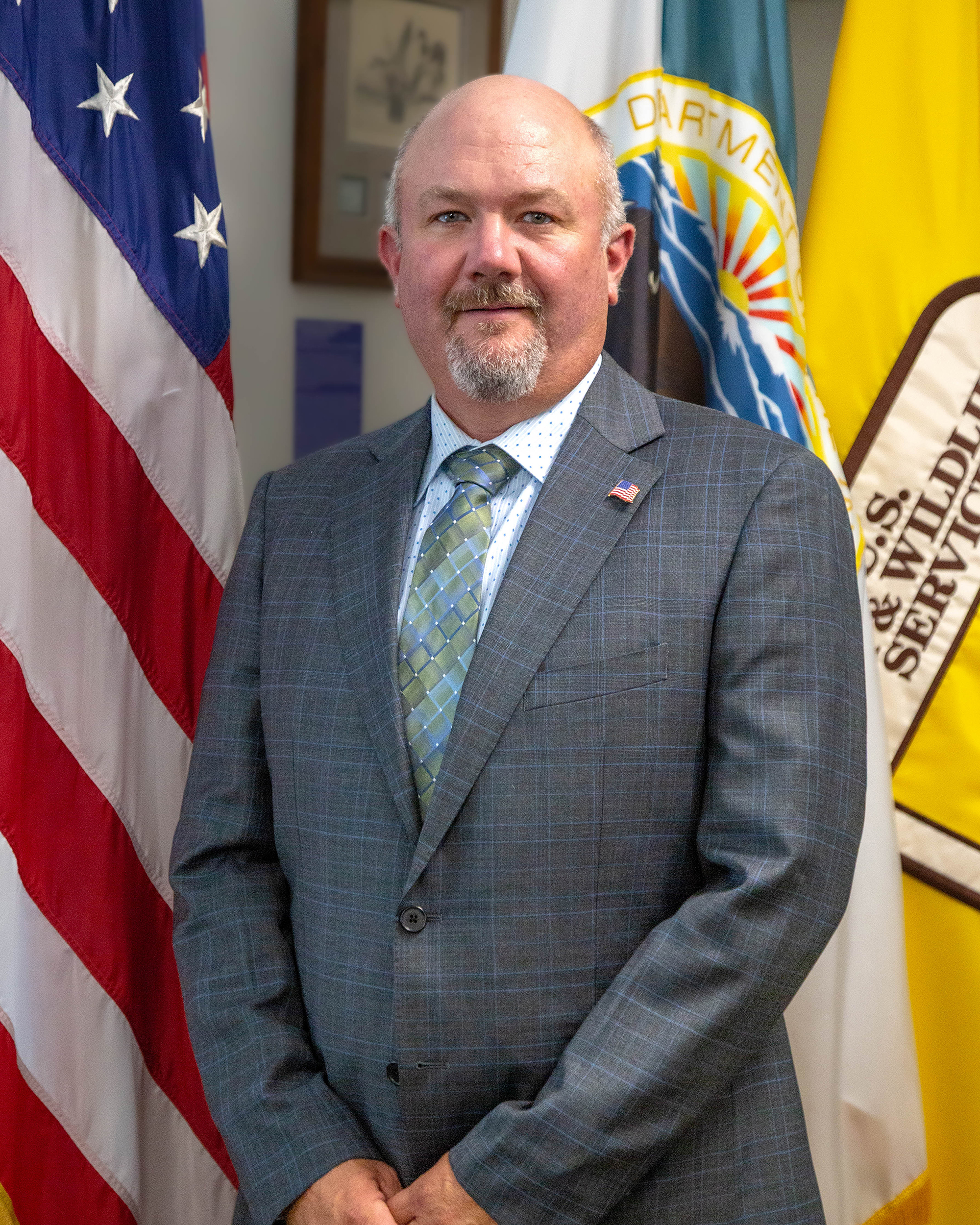
- USFWS biography and official portrait
Education, state and military service, retirement, nomination, and federal start date. Portrait credited to USFWS.
- Nesvik's March 26, 2025 Senate opening statement
His own account of conservation experience, leadership commitments, permitting and voluntary compliance.
- Senate confirmation roll call
August 1, 2025 vote: 54 in favor, 43 opposed, three not voting.
- Nesvik's April 2024 explanation of the wolf case
Cowboy State Daily interview with Nesvik and comments from county prosecutor Clayton Melinkovich.
- Roberts' felony guilty plea
WyoFile's March 5, 2026 courtroom report.
- Roberts' April 2026 sentencing
WyoFile reporting on the probation sentence and suspended prison term.
- Roberts' historical state contracts
The roughly $120,000 total spans two Wyoming agencies and 2020-2024, not a federal appointment or a current contract total.
- ProPublica's financial-disclosure collection
Nominee holdings, value brackets, subsequent transactions and links to original ethics filings.
- March 9, 2025 ethics agreement
Original agreement: retained businesses, management resignations, recusals, NRCS contract and required divestitures.
- November 18, 2025 compliance certification
Signed certification of resignations and divestitures, NRCS modification and limited former-relationship authorizations.
- AP on Nesvik's nomination and grizzly position
Background on his Wyoming advocacy for removing grizzly protections.
- USFWS grizzly rulemaking status
Reviewed September 25, 2026; the page identifies the revisions as proposed, with no final rules published.
- USFWS July grizzly proposal questions and answers
The proposal retains threatened status and describes tiered management flexibility, not delisting.
- AP on the Colorado wolf-sourcing restriction
Reporting on Nesvik's October 10, 2025 letter.
- Colorado's January 16, 2026 response
Colorado Parks and Wildlife's legal position and account of earlier coordination with federal staff.
- Colorado annual wolf report coverage
Alamosa Citizen on canceled Canadian sourcing plans and unsuccessful alternative arrangements.
- Interior's July 10 harm-rule announcement
The administration's rationale and its assurance concerning actions that directly injure or kill listed wildlife.
- GAO review of the harm rule
Publication and stated effective dates, plus the congressional-review timing concern.
- Nesvik's September 14 take memorandum
Four-page USFWS directive obtained and published by the Center for Biological Diversity; reviewed as page images.
- AP on the directive and Interior's response
September 17 reporting, including the department's defense of the guidance.
- Babbitt v. Sweet Home, 1995
Supreme Court majority opinion and Scalia dissent concerning the harm regulation.
- Stateline on enforcement and litigation risks
September 21 reporting on conservation lawyers' objections and potential citizen litigation.
- California attorney general's September 9 lawsuits
Coalition announcement and allegations challenging three regulatory changes; these complaints preceded the memo.
- Director's Order 230
Refuge and hatchery review scope, reporting deadlines and March 31 amendment.
- Nesvik's public explanation of the refuge review
MeatEater's January hearing account, including his denial that the review aimed to identify land for sale.
- September 2 staffing analysis
The Center for Biological Diversity's analysis of agency rosters; the figures are attributed to that organization.
- September 23 Senate oversight letter
Schiff and Whitehouse's requests concerning staffing and the refuge review, with an October 7 response date.