The case ended in probation
Cody Roberts is not in prison. As of September 25, 2026, the available court reporting places the Daniel, Wyoming man under an 18-month probation sentence for felony animal cruelty after the wolf abuse case that made his name a national shorthand for predator cruelty.
WyoFile reported that Sweetwater County District Judge Richard Lavery sentenced Roberts on April 8, 2026, to 18 months of probation, a $1,450 fine, and a suspended prison sentence of up to two years. If the probation term runs from that sentencing without modification or revocation, it reaches into October 2027.
The sentence followed Roberts' March 5, 2026 guilty plea to one felony count of animal cruelty. WyoFile reported that Roberts apologized in court, said he regretted his actions, and entered the plea after a grand jury indictment and a plea agreement moved the case toward a probation outcome rather than a trial.
Probation is the legal result. The moral result is much uglier. A wolf was chased, injured, restrained, displayed inside a bar, photographed, and killed. A state whose first penalty was a $250 ticket then spent two years showing the country how thin its predator-cruelty rules really were.
The night in Daniel
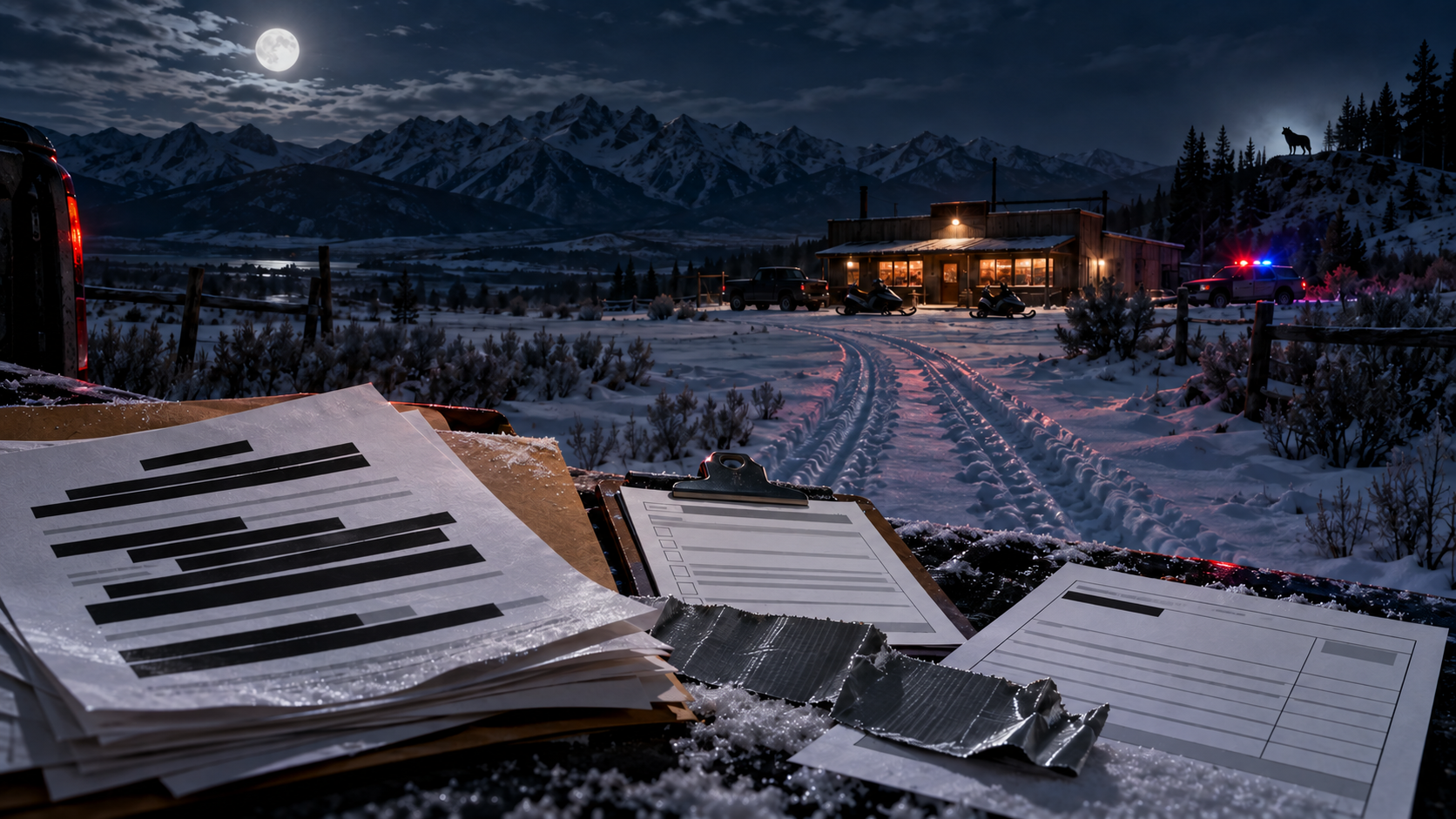
The underlying incident happened on February 29, 2024, in Sublette County. WyoFile reported that Roberts used a snowmobile to pursue, run over, and maim a wolf. The animal was then taped around the jaws, taken to the Green River Bar in Daniel, displayed for some period of time, and later taken behind or outside the bar and killed.
The wolf has been described in reporting as an adolescent animal. WyoFile reported that a Game and Fish official said Roberts acquired the animal by striking it with a snowmobile until it was barely conscious. The prosecutor later told the court that the wolf limped into the establishment and by the end of the night appeared unable to move on its own.
That sequence is the heart of the case. The cruelty was not limited to the final shot. The cruelty was the delay, the restraint, the public display, the photos, the beer-can pose, the choice to turn an injured wild animal into entertainment, and the time the animal remained alive while people around it had power over its suffering.
The bar scene became viral because it made the hidden assumption visible. The animal was not treated as a wounded creature. It was treated as a prop in a culture where the word predator can be used to strip an animal of all moral weight.
The first penalty was a state embarrassment
The original government response was a $250 citation. WyoFile reported that Wyoming Game and Fish fined Roberts for possession of warm-blooded wildlife. Cowboy State Daily described the citation as illegal possession of a live warm-blooded animal.
That number is the reason the case exploded. Two hundred fifty dollars sounded less like punishment than a fee for getting caught after the photos escaped the room. For people outside Wyoming, the gap between the conduct and the penalty was shocking. For people inside the state's wildlife-law world, the gap exposed something officials already knew: wolves in much of Wyoming are treated as predators, not as trophy-game animals.
The distinction is not academic. Wyoming law has long allowed predatory animals and predacious birds to be taken without a license, in any manner, and at any time, subject to listed exceptions. Wolves outside the trophy-game zone can fall into that legal world.
Once a wolf sits inside that category, the state sends a blunt signal. The animal can be killed. The method can be broad. The public fight begins only when the killing becomes grotesque enough, documented enough, and humiliating enough to force a second look.
Who Roberts is in the public file
Roberts is publicly identified in court and news reporting as a Daniel, Wyoming resident and lifelong Sublette County resident. Cowboy State Daily reported in May 2024 that he owned C Roberts Trucking LLC, a Daniel-based company that had received state-agency trucking contracts.
The business record belongs in the file because it shows Roberts was not simply a random anonymous figure on the edge of the state. Cowboy State Daily reported that C Roberts Trucking LLC had earned roughly $120,000 through contracts with the Wyoming Game and Fish Commission, Wyoming Game and Fish Department, and Wyoming Department of Transportation from 2020 through 2024.
Game and Fish told Cowboy State Daily that one active contract was awarded under procurement rules, that the department used local businesses where possible, and that the current contract was set to expire in June 2024 with no additional or pending work at that time.
That context does not change the criminal case. It changes the institutional feel of the case. The agency that first issued a $250 ticket was also an agency whose commission or department had paid Roberts' company for local work, according to the reporting. A small rural contracting ecosystem can be lawful and still feel too close when the public is trying to understand why the first sanction was so weak.
The state-contract angle is narrow
There is no need to inflate the contract reporting beyond the documents. Cowboy State Daily reported about $120,000 across several years, not a giant fortune. The public reporting did not establish that the contracts controlled the wildlife citation, and it did not establish that Roberts received new Game and Fish work after the outrage became public.
The contract file still deserves to sit beside the case. Rural power often operates through ordinary relationships: local vendors, state work, agency familiarity, county culture, hunting circles, ranching circles, and shared assumptions about predators. Corruption can be a formal payoff. It can also be a worldview so normal inside a system that outsiders only see it when something horrific leaks.
The safe conclusion is limited and serious. Roberts was not only the man in the bar photo. He was a local trucking contractor whose company had done paid work for state agencies, including the wildlife agency that initially treated the case as a low-dollar possession violation. That fact sharpens the demand for visible independence in every enforcement decision around him.
The prosecutor forced the second chapter
Wyoming Game and Fish's first response did not end the case. WyoFile reported that Sublette County law enforcement took a different view, the local sheriff launched an investigation, and Sublette County Prosecuting Attorney Clayton Melinkovich presented the matter to a grand jury.
The grand jury indicted Roberts in 2025 on a felony animal cruelty count. That indictment mattered because it rejected the idea that the predator label could swallow every cruelty concern. It also showed that the original $250 citation was not the outer edge of possible legal accountability.
Roberts initially pleaded not guilty. WyoFile reported that his attorney sought dismissal, arguing in line with the Game and Fish position that wolves in that status were exempt from Wyoming animal-cruelty law. The judge allowed the case to keep moving toward trial before the plea deal resolved it.
The prosecutor's path should be understood as a stress test for Wyoming's wildlife law. The state had built a predator category broad enough to make cruelty hard to charge. Local prosecutors then had to find a route through the gap after public outrage made the easy answer impossible.
The guilty plea centered suffering
The plea shifted the case away from a narrow possession dispute and toward the suffering of the animal. WyoFile reported that Roberts pleaded guilty to felony animal cruelty after a plea agreement signed in February 2026. The agreed sentence called for a prison term to be suspended in favor of probation and a fine.
The prosecutor's account in court placed the wolf's condition at the center. WyoFile reported that Melinkovich said the wolf limped inside the bar and later had to be carried before Roberts took it outside and shot it. The legal wrong was not that Roberts killed a wolf in a predator zone. The legal wrong was the needless suffering after the animal had been reduced to possession.
That distinction is revealing. Wyoming's system still treated the wolf's death as broadly allowed. The legal line hardened around the treatment of the animal after capture, restraint, transport, display, and delay. A state can call that accountability, but it is also an admission that the front half of the violence remains largely protected.
The plea produced a conviction. It did not produce a clean system. It confirmed that prosecutors could sometimes punish the cruelty that happens after an animal is in someone's control. It left the larger pursuit-and-strike culture standing.
The sentence was a message too
The court imposed probation, a fine, and a suspended prison sentence. WyoFile reported that the judge described the charge as disturbing and cruel, while also accepting a deal that kept Roberts out of prison if he complies with probation.
WyoFile reported probation terms that included no hunting or fishing, no alcohol, no presence at bars or liquor stores, and treatment recommendations. Those restrictions make sense in a case that passed through a bar and a hunting-culture environment. They also underscore how modest the final outcome was compared with the global outrage.
Supporters of the sentence can argue that Roberts now has a felony conviction, probation supervision, fines, public disgrace, and restricted access to hunting, fishing, alcohol, and bars. Those are real consequences. They are not the same as prison, and they are not the same as a statewide ban on the conduct that led to the wolf's injuries.
The sentence told Wyoming residents and outsiders that the justice system could call the conduct cruel without using its harshest punishment. That may fit the plea agreement. It also leaves a bitter public impression: the animal suffered longer than the defendant was physically confined.
His status now
The practical answer to the user-facing question is simple: Roberts is a convicted felony animal-cruelty defendant on probation, not a jailed defendant, based on the latest court reporting located for this article. His public profile remains tied to Daniel, Wyoming, C Roberts Trucking LLC, and the wolf case.
No verified public reporting located here shows a later probation revocation, prison commitment, or new public occupation that replaces the trucking profile. The cautious way to describe him now is therefore not as a mystery figure and not as a folk villain with invented details, but as a local contractor whose public identity was overtaken by a felony cruelty case.
That distinction matters for accuracy and safety. The public has every right to scrutinize Roberts' conduct, his court record, state contracts, and any future public-facing business or government relationship. The public does not need his private address, family details, harassment campaigns, or amateur punishment.
Accountability should stay pointed at what is documented: the animal abuse, the guilty plea, the sentence, the state-law structure, the agency response, the contracts reported through public spending records, and the political choice to leave motorized predator pursuit available.
HB 275 fixed less than Wyoming wants credit for
Wyoming did pass a law after the outrage. HB 275, titled Treatment of Animals, was signed by Governor Mark Gordon on March 3, 2025, according to the Wyoming Legislature's bill summary. The enrolled act became Chapter 93 and took effect July 1, 2025.
The law created or amended penalties for torturing, tormenting, or mutilating living wildlife, including predatory animals and predacious birds, after the animal has been reduced to possession. A first offense in that lane is a misdemeanor punishable by up to six months in jail and a fine of up to $5,000. A second or later offense can reach felony territory.
HB 275 also added a motorized-pursuit rule. If a person pursues a predatory animal or predacious bird by vehicle or snow vehicle and injures or incapacitates the animal, the person must make a reasonable effort to immediately kill the injured or incapacitated animal.
That is an improvement over pretending the Roberts case revealed nothing. It is still a narrow fix. Wyoming did not ban the use of snowmobiles or other vehicles to pursue predators. WyoFile's legislative reporting was blunt on that point: HB 275 did not propose changes to statutes that allow running over animals with snowmobiles or other motorized vehicles.
The snowmobile loophole remains
The new law treats the post-capture suffering as the central legal problem. It also tells people who injure or exhaust predators by vehicle to make a reasonable effort to kill the animal immediately. That is better than letting an injured wolf be hauled into a bar. It still leaves the chase, collision, exhaustion, and impact path legally available.
That structure protects the cruelest premise. A person can still turn a machine into a weapon against a living animal, so long as the aftermath is handled quickly enough to avoid the Roberts-style spectacle. The lesson becomes procedural: if you run down the predator, finish the violence fast and out of sight.
A serious animal-welfare law would start earlier. It would say the deliberate motorized pursuit, exhaustion, striking, maiming, or crushing of predators for recreation is itself unacceptable. It would treat suffering during the chase as suffering, not just the suffering after possession.
Wyoming chose a smaller line. The state responded to the public-relations nightmare without fully rejecting the practice that produced the nightmare. That is not moral reform. It is damage control wrapped in statute language.
Predator law trained the culture
The Roberts case did not happen in a cultural vacuum. Predator classifications teach people how to see animals. When law says an animal can be killed at any time, in almost any manner, without a license, that language works on the human imagination. It tells some people the animal has already been morally disposed of.
Wolves are not symbols to the wolf. They are social, intelligent, territorial animals with bodies that feel pain and fear. They can kill livestock. They can also be scapegoated into a category where cruelty is excused as management, tradition, recreation, or rural toughness.
Wyoming officials and sportsmen who were embarrassed by the Roberts case should ask a harder question. Was Roberts an aberration, or did he act inside a culture that had already made the animal's suffering easier to dismiss? The answer may be uncomfortable because the state's first penalty came back at $250.
A law does not have to order cruelty to normalize it. Sometimes it only has to create a category of animal whose suffering receives less attention until cameras, screenshots, and national outrage force the state to care.
The wolf was treated like evidence after being treated like a joke
The public saw photos, video references, court descriptions, a bar setting, and a defendant who became infamous because the scene looked so casual. The wolf's suffering became undeniable precisely because humans made a spectacle of it.
That is part of the horror. If Roberts had killed the wolf immediately in the field, much of the legal system might have treated the event as ordinary predator control. The animal's chance at justice came from the fact that the cruelty became embarrassing to other people.
That should disturb anyone who cares about law. The system should not need a viral humiliation event before it can recognize needless suffering. The state's compassion should not depend on whether the abuser made the mistake of turning the abuse into content.
Animal-cruelty law is supposed to express a baseline civic value: even when humans have authority over animals, they cannot torment them for amusement. Wyoming's predator framework weakened that value and then acted surprised when the weakness showed up in public.
Our take: probation was too light
Eighteen months of probation for this conduct is too light. A person who runs down a wolf with a snowmobile, restrains the injured animal, brings it into a bar, allows it to be displayed, and kills it later has crossed a line that should carry more than supervision, a fine, and temporary restrictions.
That position is not about revenge. It is about deterrence and moral clarity. If a state wants people to know that predator cruelty is unacceptable, the sentence has to feel larger than the scandal. Here, the scandal still feels larger than the sentence.
The probation terms may restrict Roberts' future behavior, and the felony plea may follow him. The wolf still received the harshest consequence. The state should be honest about that imbalance instead of congratulating itself for finding a belated legal lane.
Our take: end motorized predator pursuit
Wyoming should ban recreational motorized pursuit, striking, exhaustion, or maiming of predators. The state can still debate livestock protection, depredation response, hunting zones, compensation programs, and wildlife management without defending the use of machines to run animals down.
A snowmobile is not a fair-chase tool when it is used to exhaust and hit a living animal. It is not wildlife management in any meaningful ethical sense. It is mechanized domination, and it invites exactly the kind of cruelty the Roberts case exposed.
The state should also require mandatory reporting when a predator is struck or incapacitated by a vehicle during intentional pursuit, preserve evidence in serious cases, bar public display of live injured wildlife, and impose mandatory hunting and fishing privilege suspensions for cruelty convictions involving wildlife.
If Wyoming wants the public to believe the Roberts case was not who the state is, it needs laws that prove it. A narrow prompt-kill rule after injury is not enough. Ban the chase-as-cruelty pathway before the next animal becomes a photo in a bar.
Our take: agencies need a conflict wall
State wildlife agencies in small communities will always know local contractors, ranchers, outfitters, hunters, landowners, and business owners. That reality makes visible conflict walls more important, not less.
When a person accused of a notorious wildlife-abuse incident also owns a company that has received agency-related contracts, the public deserves a clean enforcement paper trail. Who made the charging decision? Who reviewed alternatives? Who had prior business contact? Who signed off? Which documents support the fine level?
Those questions should not be framed as attacks on every local official. They are how institutions protect themselves from favoritism, familiarity bias, and public distrust. The state can say procurement rules were followed and still owe the public proof that enforcement was independent.
A $250 first response created the distrust. Transparency is the way out. Wyoming should publish more, not less, when wildlife enforcement touches people with state-agency business relationships.
The needed reforms are obvious
First, ban intentional motorized pursuit and striking of predators by private individuals. Second, require immediate reporting of any intentionally pursued predator that is injured or incapacitated by a vehicle. Third, make public display, transport for display, or delayed killing of live injured wildlife a serious offense on the first conviction.
Fourth, strengthen penalties so the first serious wildlife-cruelty offense can reach felony treatment when facts show torture, torment, restraint, exhibition, or delay. Fifth, require mandatory suspension of hunting, fishing, trapping, and predator-taking privileges after a serious cruelty conviction.
Sixth, make agency conflict reviews public when defendants or their companies have current or recent contracts with the enforcing agency. Seventh, collect statewide data on motorized predator pursuit, reported injuries, citations, prosecutions, and outcomes. If Wyoming insists the practice is rare and ethical, data should not frighten the state.
Those reforms would not turn wolves into sacred untouchable symbols. They would set a floor beneath human behavior. A state can manage predators without allowing people to treat suffering as sport.
The politics of rural pride
Roberts' case also collided with rural identity politics. Outside outrage often lands as contempt in small communities. Tourism-boycott calls and national social-media pile-ons can make residents defensive even when they privately hate the conduct.
That defensiveness helps bad systems survive. A community can reject outsider sneering and still confront local cruelty. It can defend rural life without defending a man dragging a wounded wolf through a bar scene. It can value hunting, ranching, and independence without allowing predator law to become a cruelty shield.
Rural Wyoming deserved better than becoming globally associated with this incident. The way to repair that reputation is not to complain that outsiders noticed. It is to make sure outsiders never again have to explain to Wyoming that a wolf should not be run down, taped, displayed, and killed after a night of humiliation.
The bottom line is bigger than Roberts
Cody Roberts is responsible for his conduct. He pleaded guilty. He is serving probation. His public identity now carries the wolf case everywhere it goes. That is earned.
Wyoming is responsible for the system around him. The state's predator framework made the first official penalty absurdly small. Its reform improved the law after possession and injury, while leaving the motorized pursuit pathway open. Its sentence left many people seeing probation where they expected prison.
The country should remember the wolf, not just the defendant. The animal's suffering exposed a legal culture that had sorted predators into a lower moral category. Roberts made that culture visible in the ugliest way. Wyoming still has to decide whether visibility is enough to force real change.
Sources & records
Reviewed by Standards Review. Updated September 25, 2026.
- WyoFile Sentencing Report
Primary court report used for the April 2026 sentence, the 18-month probation term, the suspended prison sentence, the fine, the Feb. 29 incident summary, and the judge's description of the conduct.
- WyoFile Guilty Plea Report
Primary court report used for the March 5, 2026 guilty plea, Roberts' apology, the plea-agreement terms, the probation restrictions, the grand jury context, and the prosecutor's account of the injured wolf inside the Green River Bar.
- WyoFile On HB 275 And The Snowmobile Gap
Legislative-session reporting used for the Wyoming debate over predator torture, proposed penalties, and the fact that HB 275 did not ban running over predators with snowmobiles or other motorized vehicles.
- Wyoming Legislature HB 275 Summary
Official bill-history summary used for sponsorship, passage votes, the governor's March 3, 2025 signature, and Chapter 93 assignment.
- Wyoming Enrolled Act HB 275
Official enrolled act used for the July 1, 2025 effective date, the new wildlife-possession cruelty language, the prompt-kill requirement after motorized pursuit injures or incapacitates a predator, and the unchanged broad predator-take language.
- Cowboy State Daily On State Contracts
Report used for Roberts' public business profile as owner of C Roberts Trucking LLC and the roughly $120,000 in Wyoming Game and Fish and WYDOT contract payments reported from 2020 through 2024.